Aluminium Foil 3003 for Heat Exchanger Fin
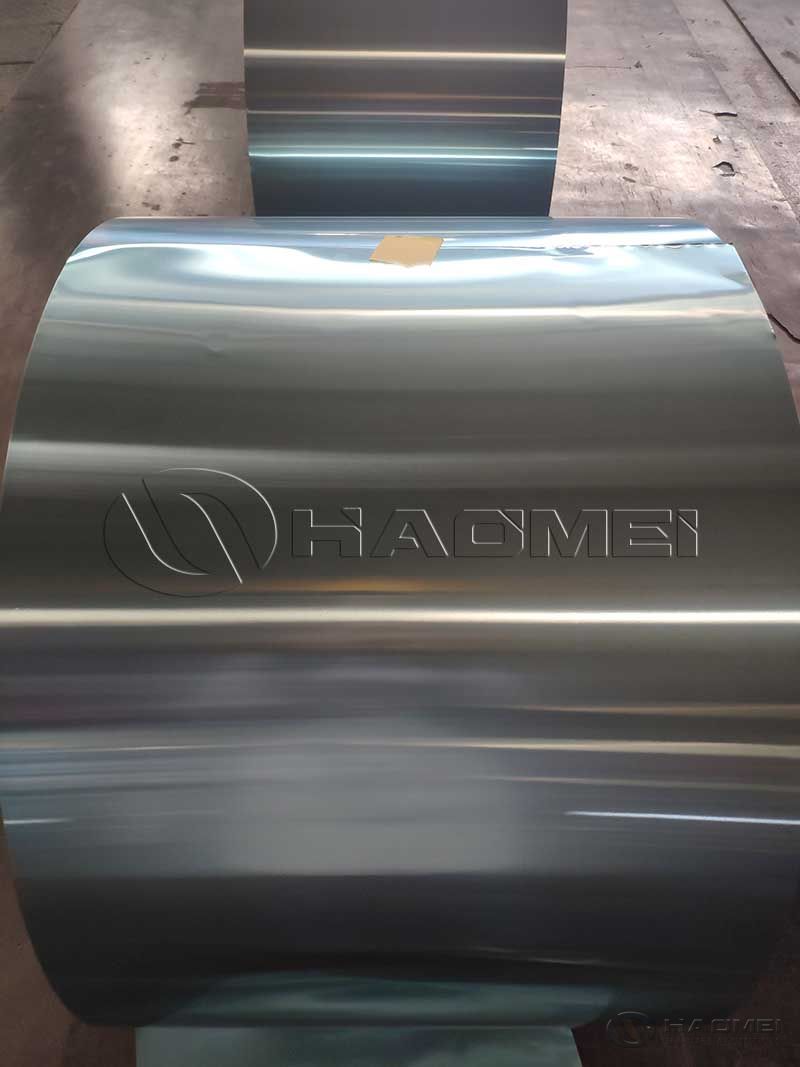
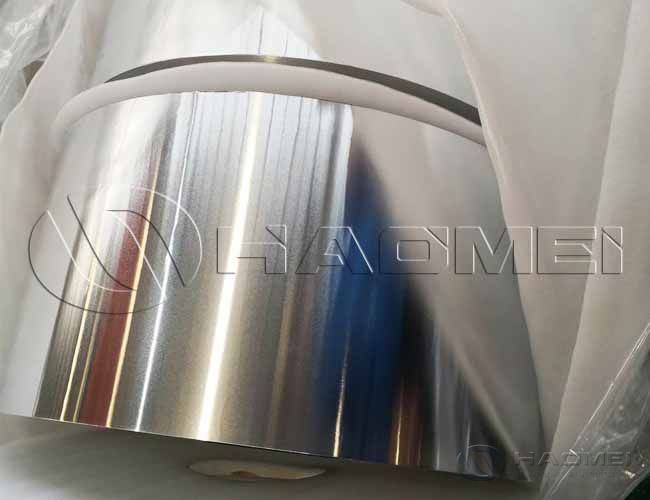
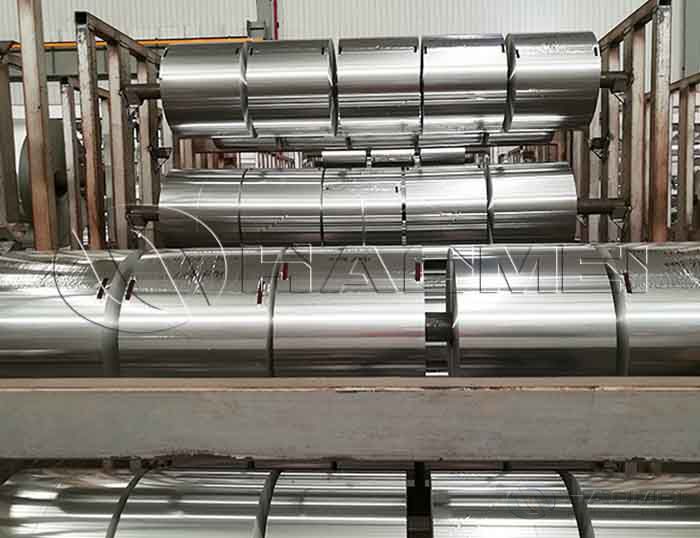
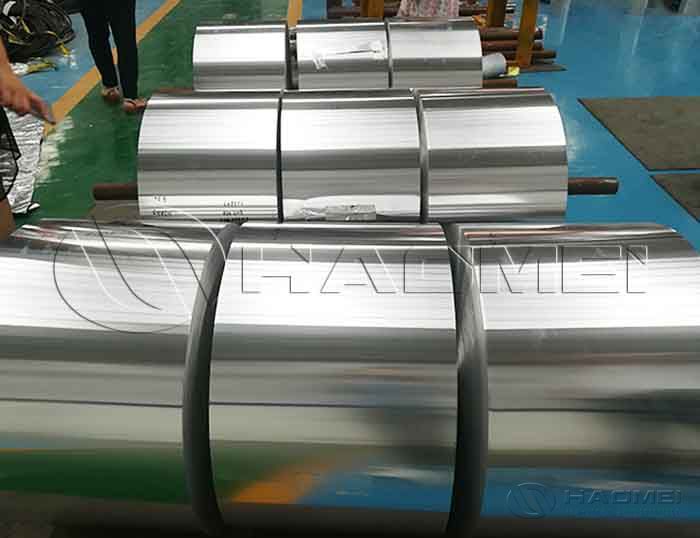
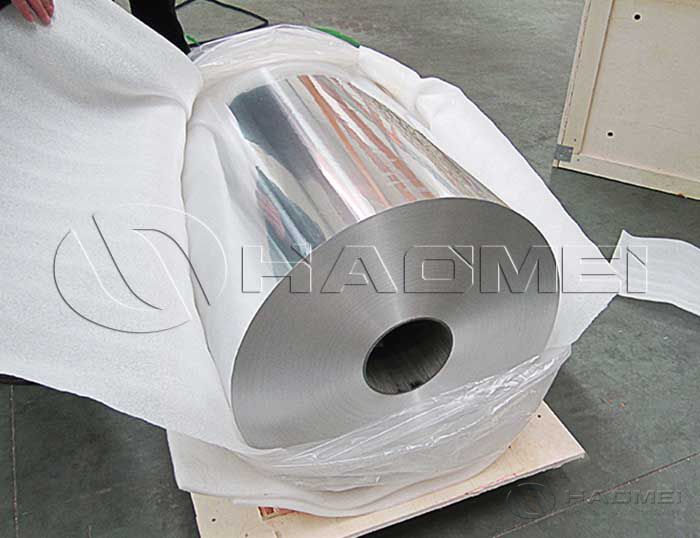
3003 aluminum foil jumbo roll is an aluminum-manganese (Al-Mn) rust-proof alloy specifically optimized for heat exchange applications. Characterized by high strength, resistance to corrosive media, and suitability for high-temperature brazing, it is widel
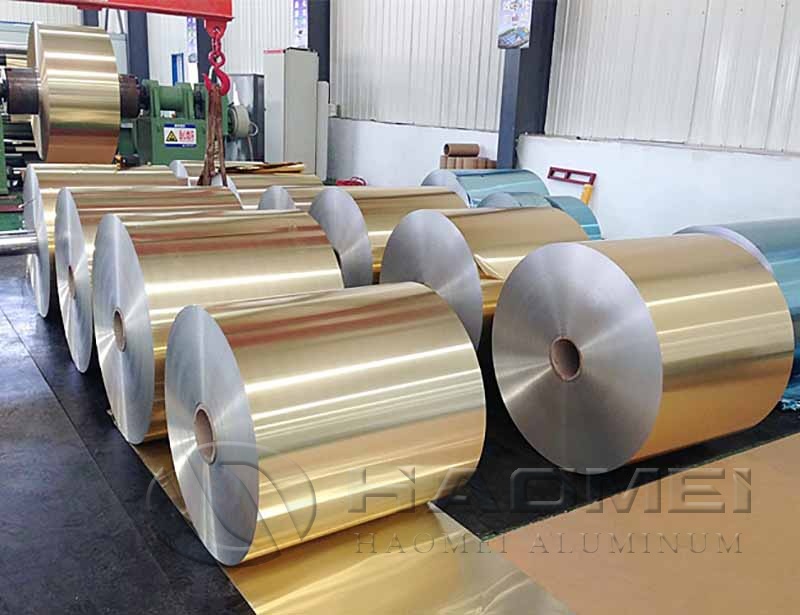
3003 aluminum foil jumbo roll is an aluminum-manganese (Al-Mn) rust-proof alloy specifically optimized for heat exchange applications. Characterized by high strength, resistance to corrosive media, and suitability for high-temperature brazing, it is widely used in heat exchangers across three major sectors: residential, automotive, and industrial. It serves as a core material for high-end heat exchange fins. In contrast, standard residential air conditioner fins typically utilize the more cost-effective 8011 aluminum foil, as the 3003 alloy is not required for those applications.

I. Core Application Scenarios
1. Automotive Heat Exchangers (Primary Application)
This is the most significant application area for 3003 aluminum foil. Automotive thermal management systems operate under complex conditions, requiring resistance to coolant corrosion, high-frequency vibration, and thermal shock from rapid temperature fluctuations. Consequently, 3003 aluminum foil and its modified variant, 3003MOD, are the standard materials for fins in automotive radiators, condensers, evaporators, and oil coolers. Among these, 3003+4343/4045 composite brazing foil is the most widely used; the 3003 core ensures structural integrity, while the brazing alloy surface layer melts during high-temperature brazing to form a sealed joint. The finished product is free from delamination or cracking issues and is compatible with integrated brazing processes for automotive heat exchangers.
2. HVAC Heat Exchangers for Harsh Environments
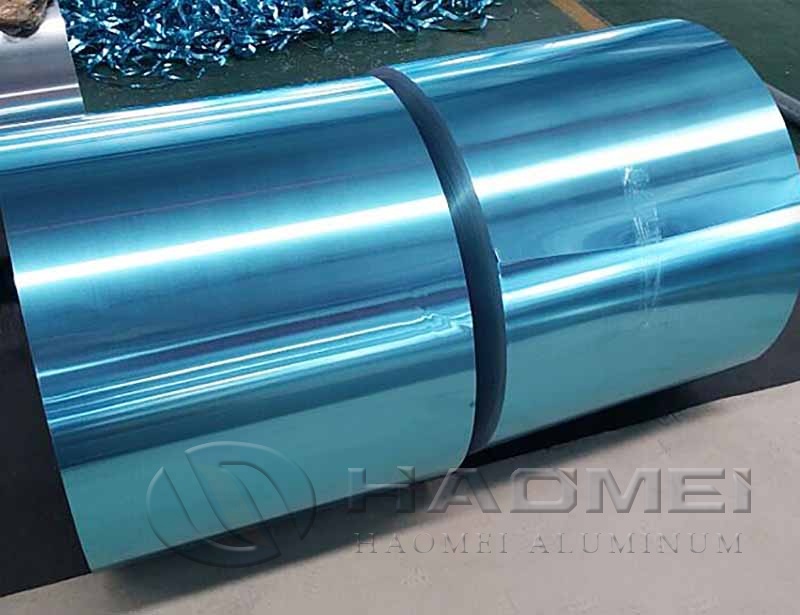
Hydrophilic-coated 3003 aluminum foil is the preferred choice for air-cooled heat exchangers and heat pump evaporators operating in demanding environments, such as coastal areas, chemical processing plants, and outdoor base stations. The manganese content in the alloy facilitates the formation of a dense oxide film, effectively resisting corrosion from salt spray, humid air, and mildly acidic or alkaline condensate. This prevents fin oxidation, collapse, and blockage of heat exchange channels, thereby significantly extending the service life of outdoor HVAC equipment.
3. Specialized Industrial Heat Exchangers
This material is suitable for equipment such as liquid-cooled heat exchangers for energy storage systems, radiator assemblies for construction machinery, and heat exchangers for marine cabins. Compared to standard pure aluminum foil, 3003 aluminum foil offers approximately 20% higher strength. It combines lightweight properties with structural integrity and resistance to hydraulic shock. Additionally, its excellent deep-drawing formability allows for the fabrication of complex, irregularly shaped fins, meeting the demands for compact design and high-load heat dissipation in industrial equipment.
II. Five Key Differentiated Advantages
1. Excellent corrosion resistance
The addition of manganese to the base alloy creates a dense protective film that blocks moisture, chloride ions, and coolants from corroding the substrate. Its resistance to salt spray and chemical media far exceeds that of standard aluminum, fundamentally preventing issues such as fin perforation, powdering, and heat transfer efficiency degradation, making it suitable for various harsh operating conditions.
2. High rigidity and resists deformation
Manganese-induced solid-solution strengthening enhances the material's tensile and yield strengths. Once stamped into fins, the material withstands wind pressure, airflow impact, and equipment vibration—preventing fin collapse or misalignment—thereby maintaining orderly airflow channels, stabilizing heat transfer efficiency, and reducing operation and maintenance costs.
3. Compatibility with high-temperature brazing processes
The solid solution temperature range is well-optimized; the material does not soften, collapse, or undergo grain coarsening during brazing, resulting in dense, leak-free joints. It resists internal stress buildup during thermal cycling—preventing tube-end cracking and leakage—and meets the rigorous manufacturing and operational requirements for automotive heat exchangers.
4. Excellent precision processing characteristics
Balancing high strength with elongation, it can be rolled into thin-gauge materials (0.09–0.2 mm) and is suitable for processes such as high-speed stamping and deep drawing without cracking or "orange peel" defects. It allows for the fabrication of various complex fin shapes and is well-suited for large-scale precision mass production.
5. Controllable overall costs
The base material features low density and excellent thermal conductivity, meeting lightweight design needs. Although the unit price is higher than that of 8011 alloy, the material offers a longer service life and lower rework rates, resulting in superior total lifecycle costs and making it an ideal substitute for copper in heat exchangers.
II. Key Comparison: 3003 Aluminum Foil vs. 8011 Aluminum Foil
8011 aluminum fin stock is a representative alloy of the 8000 series and the mainstream material for residential air conditioner fins; however, the distinction between the two regarding material selection is often misunderstood. A precise, differentiated comparison is presented below across four key dimensions: alloy nature, core performance, application scenarios, and cost.
Comparison Criteria | 3003 aluminum foil | 8011 aluminum foil |
Alloy Composition | Al+Mn,outstanding rust resistance | Al+Fe+Si, good ductility |
Corrosion Resistance | Excellent; resistant to salt spray, coolants, and mild acids/alkalis | Moderate; suitable only for standard indoor environments (dry or moderately humid) |
Mechanical Strength/Rigidity | High; resistant to wind pressure and vibration; fins do not easily collapse or deform | Moderate; strength is lower than 3003; prone to slight fin collapse under high wind pressure |
Brazing Suitability | Excellent; withstands high-temperature brazing without structural softening or deformation | Poor; prone to softening during high-temperature brazing; unsuitable for brazed automotive structural components. |
Formability | Balanced properties (combining strength and ductility); suitable for complex fin geometries | Superior ductility; suitable for high-speed stamping of simple, straight fins |
Key Application Scenarios | Automotive heat exchangers, coastal/industrial heat pumps, liquid cooling equipment for energy storage | Residential air conditioner indoor and outdoor units, standard commercial cooling coils |
Material costs | Relatively high (due to higher costs for alloy formulations and processing) | Lower; offers excellent value for money; suitable for mass-produced consumer products |
- Aluminium Foil Thickness For FoodMay 11, 2022
What are the applications of aluminum foil for food? How to choose aluminium foil thickness for food packaging...
- The Technical Parameters of Air Conditioner FoilApr 25, 2022
The common air conditioner foil 1100, 3003, 8011, etc. What are its main technical parameters? It includes fla...
- Can You Grill With Aluminum FoilMay 20, 2022
In our life, both aluminum foil and tin foil can be used for food wrapping, but aluminum foil is better for g...
- Aluminium Foil for Air ConditionerJul 08, 2022
Aluminum foil 1100, 3003 and 8011 are often used for air conditioner cooling, which is divided into plain foil...
- 3003 3004 Food Tray Aluminum FoilNov 23, 2022
Aluminum food tray is made of aluminum foil with certain strength and toughness. The two common choices are 3...
Inquiry
Products Category
Latest Application
-
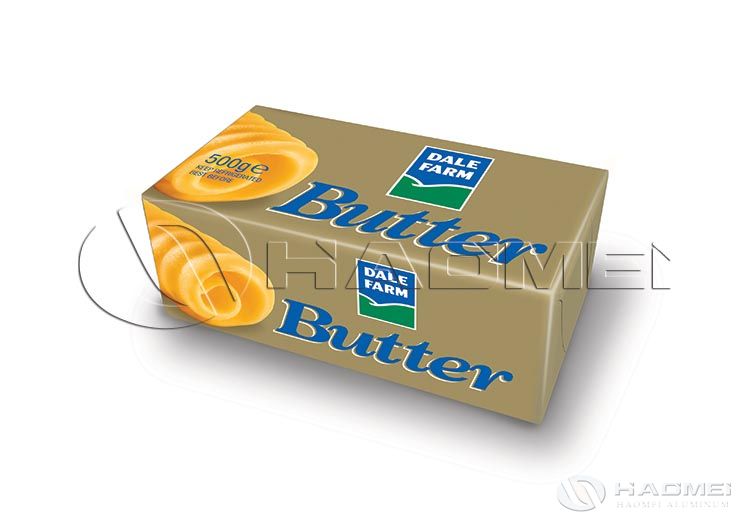 Why butter aluminum foil is neededButter aluminum foil blocks oxygen, moisture, and light, effectively preventing butter from oxidizing and spoiling, preserving nutrients, and significantly extending its shelf life. High-end products can see their sh
application
Why butter aluminum foil is neededButter aluminum foil blocks oxygen, moisture, and light, effectively preventing butter from oxidizing and spoiling, preserving nutrients, and significantly extending its shelf life. High-end products can see their sh
application
-
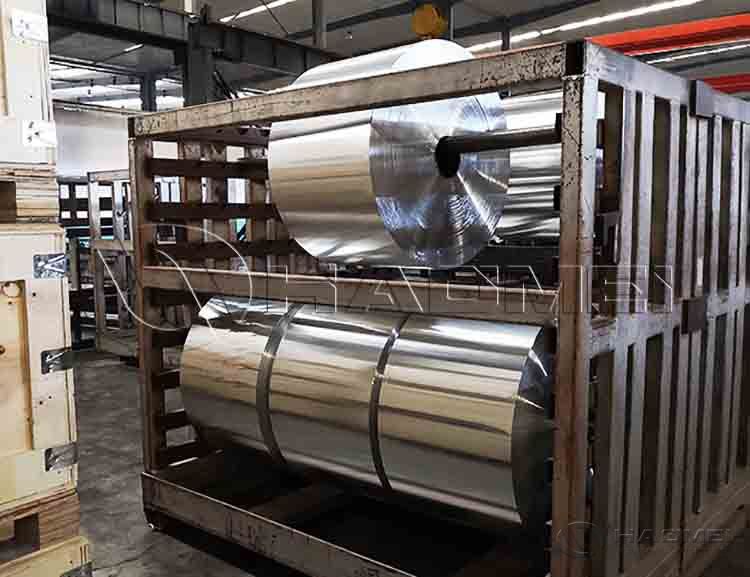 Cables are usually composed of conductors, insulation layers, shielding layers, and sheaths. Aluminum foil for cable is generally located outside the insulation layer as part of the shielding layer. It fits tightly to the surface of the insulation la
application
Cables are usually composed of conductors, insulation layers, shielding layers, and sheaths. Aluminum foil for cable is generally located outside the insulation layer as part of the shielding layer. It fits tightly to the surface of the insulation la
application
-
Aluminum Gold Foil Paper For Chocolate Wrapping
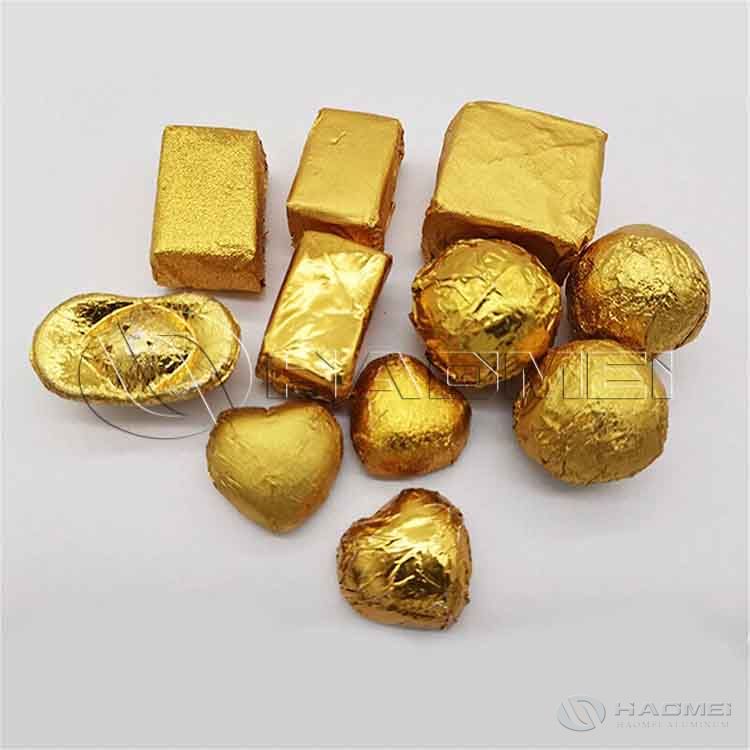 When is aluminum foil used for chocolate wrappingThe use of aluminium foil food for chocolate can be traced back to the early 20th century. In 1911, Swiss candy companies began to wrap chocolate with aluminum foil, gradually replacing the tin foil. T
application
When is aluminum foil used for chocolate wrappingThe use of aluminium foil food for chocolate can be traced back to the early 20th century. In 1911, Swiss candy companies began to wrap chocolate with aluminum foil, gradually replacing the tin foil. T
application
-
PVC Rigid Film and Aluminum Foil for Medicine Packaging
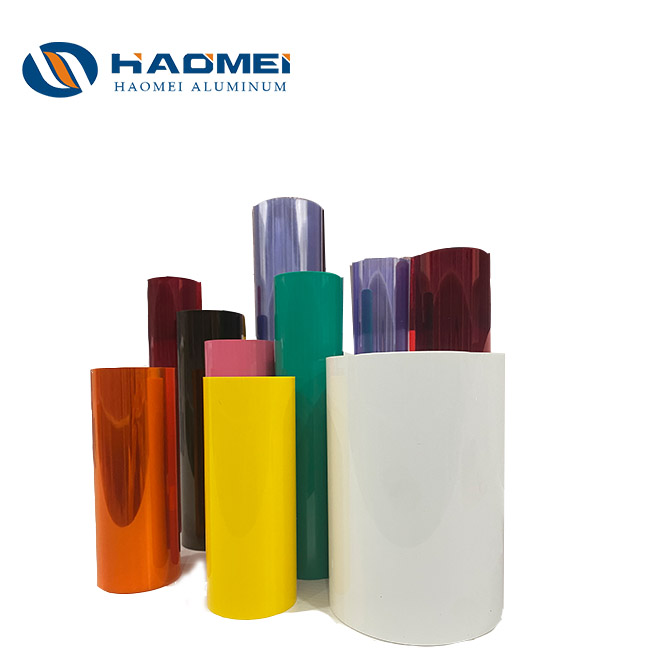 Haomei Aluminum provides different types of aluminum foil and plastic rigid films like PTP aluminum foil, cold forming foil, tropical foil, PVC rigid film, PE/PET film,etc. Best Price! Inquire now.
application
Haomei Aluminum provides different types of aluminum foil and plastic rigid films like PTP aluminum foil, cold forming foil, tropical foil, PVC rigid film, PE/PET film,etc. Best Price! Inquire now.
application
-
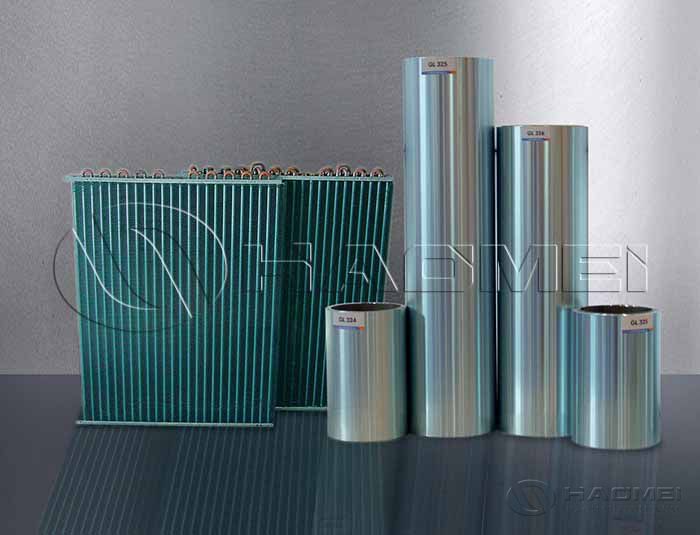 Haomei Aluminum offers you different colors of air conditioner aluminum foil like hydrophilic aluminum foil, including1100/ 3003 /8006/8011 aluminum foil,etc. Learn more.
application
Haomei Aluminum offers you different colors of air conditioner aluminum foil like hydrophilic aluminum foil, including1100/ 3003 /8006/8011 aluminum foil,etc. Learn more.
application
Latest Blog
-
 Plan year-end capacitor production with specified aluminum foil: purity, temper, surface controls, test documents, and shipment timing that reduce line risk.
Blog
Plan year-end capacitor production with specified aluminum foil: purity, temper, surface controls, test documents, and shipment timing that reduce line risk.
Blog
-
Where To Find a Reliable Air Conditioner Fin Foil Supplier
 In the competitive HVAC industry, the quality of air conditioner fin stock directly determines the heat exchange efficiency, durability, and energy-saving performance of air conditioning equipment. For manufacturers, distributors, and processing enterpris
Blog
In the competitive HVAC industry, the quality of air conditioner fin stock directly determines the heat exchange efficiency, durability, and energy-saving performance of air conditioning equipment. For manufacturers, distributors, and processing enterpris
Blog
-
 Specify aircon aluminum foil with durable hydrophilic coating: compare alloys, tests, standards, conversion costs, and receiving controls for HVAC fins.
Blog
Specify aircon aluminum foil with durable hydrophilic coating: compare alloys, tests, standards, conversion costs, and receiving controls for HVAC fins.
Blog
-
Aluminium Foil for Air Conditioner
 Explore aluminium foil for air conditioner questions on alloy, coating, thickness, and inspection for efficient, durable heat-exchanger fins.
Blog
Explore aluminium foil for air conditioner questions on alloy, coating, thickness, and inspection for efficient, durable heat-exchanger fins.
Blog
-
What Is Food Grade Aluminum Foil Jumbo Roll
 From the aluminum foil used for everyday baking and grilling to the containers used for takeout and the packaging that keeps food fresh, these ubiquitous aluminum foil products all originate from the same core raw material: the food grade aluminum foil ju
Blog
From the aluminum foil used for everyday baking and grilling to the containers used for takeout and the packaging that keeps food fresh, these ubiquitous aluminum foil products all originate from the same core raw material: the food grade aluminum foil ju
Blog

Haomei Aluminum CO., LTD.
Tel/Whatsapp: +86-15978414719
Email: sale@alumhm.com
Website: https://www.alumfoils.com
Xin'an Industrial Assemble Region,Luoyang,Henan Province,China
Office Add: 1103, No.14 Waihuan Road, CBD, Zhengzhou, China