Battery Aluminum Foil
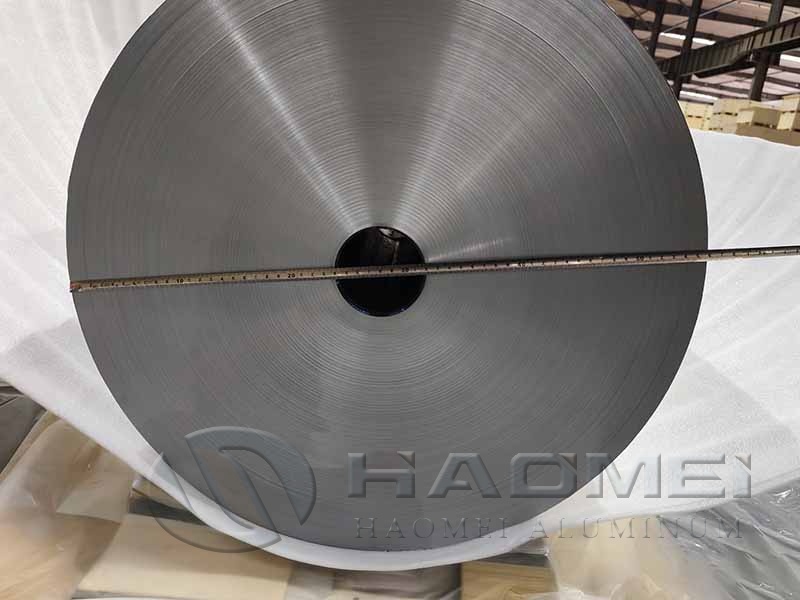
Professional checklist for battery aluminum foil: standards, key tests, typical grades, defect limits, and receiving inspection steps to reduce coating rejects.
Why coating stability is the top concern
Coating yield is often limited less by conductivity and more by surface and thickness stability of the cathode current collector. Pinholes, oil residue, edge burrs, and thickness variation can cause coating skips, poor adhesion, foil breaks, and inconsistent electrode loading. This article focuses on what to specify and how to verify incoming material so coating is stable lot to lot.

Standards you can reference in purchase documents
Use recognized standards to anchor requirements and avoid ambiguous terms like "battery grade". Commonly referenced frameworks include:
Alloy and temper designations: Aluminum Association (AA) designations are globally used for alloy naming.
Dimensional tolerances and flat rolled product requirements: EN 546 (Aluminum and aluminum alloys. Foil) is widely used in Europe for foil tolerances and defects classification.
Chemical composition: EN 573 series (Europe) or AA composition limits (commonly used worldwide).
Surface cleanliness testing methods: ASTM methods for residual oil and related cleanliness checks are often used as test references (select the exact method and acceptance limit in your contract).
Practical tip: put the test method and sampling plan directly into the order, not only the target value. This prevents disputes when different labs use different procedures.
What to specify: a procurement checklist (coating focused)
Specify only what affects coating and winding performance. A concise checklist that suppliers can execute:
Alloy and temper
Typical cathode collector alloys: 1xxx series (high purity Al) for high conductivity and good ductility.
Common choices in the market: 1050, 1070, 1100, 1235 (availability varies by region).
If you need a product reference point, see 1050 Aluminum Foil for Battery and Electronics or 1235 Aluminum Foil Battery and Tape.
Thickness, width, and coil build
Nominal thickness (µm), with max deviation and within coil variation.
Width tolerance and edge condition (slit edge burr limit).
Coil ID/OD, max coil weight, splice policy (allowed/not allowed), winding direction.
Surface requirements (most important for coating yield)
Residual rolling oil limit and test method.
Surface roughness range (Ra) or a supplier standard tied to your coater performance.
No scratches, pits, pinholes, or embedded particles beyond defined size/count limits.
Mechanical properties (only those you use)
Tensile strength and elongation ranges, if you control tension and want consistent runnability.
Flatness/shape: wave, camber, telescoping limits.
Packaging and cleanliness control
Vacuum or moisture barrier packaging if you store long or in humid climates.
Maximum storage time from production date and handling requirements (gloves, no paper dust).

Incoming inspection steps that prevent coating rejects
Short, repeatable checks are more valuable than a long list no one executes. Below is a plant friendly incoming plan (adjust to your risk level and supplier history).
Receiving inspection workflow (recommended)
Document review
Match COA to coil IDs, alloy/temper, thickness, and inspection results.
Confirm production date and packaging integrity.
Visual and edge check (100% of coils)
Look for telescoping, crushed edges, water stains, oxidation spots.
Edge burr: quick tactile check plus microscope measurement on sampled coils.
Thickness and width verification
Use calibrated micrometer or beta gauge at multiple transverse points.
Record within coil variation (start, middle, end).
Surface cleanliness screening
Perform a standardized wipe or solvent extraction test (define method and limit).
If your process is sensitive, add contact angle or dyne test as a fast indicator (must correlate to your coating adhesion data).
Pinhole/defect inspection
Light table inspection for thin foil; define allowable defect size and count per area.
Trial coating coupon (when changing supplier or after complaints)
Coat a short run using your standard slurry; check adhesion, coating uniformity, and break rate.
Defect-to-problem mapping (useful on the shop floor)
| Incoming issue | What you see during coating/calendering | Typical containment action |
|---|---|---|
| High residual oil | Coating skips, low adhesion, fish eyes | Quarantine lot; verify oil test; tighten cleaning limit |
| Edge burrs | Foil breaks, particle streaks | Reject or re-slit; add burr max spec |
| Thickness variation | Loading variation, calender density drift | Tighten thickness tolerance; require gauge control data |
| Pinholes/pits | Local defects, coating voids | Tighten pinhole count/size; improve inspection level |
| Poor flatness/telescoping | Wrinkles, tension instability | Define flatness limits; improve winding and packaging |

Comparing common alloys used for cathode collectors
Availability and consistency often matter more than small conductivity differences. Use this comparison to shortlist candidates, then validate on your coater.
| Grade family | Typical positioning | Strengths for coating | Watch-outs |
|---|---|---|---|
| 1050 (1xxx) | Common baseline | Good ductility, stable processing, widely available | Verify cleanliness and burr control by supplier |
| 1070 (1xxx) | Higher purity | Higher conductivity, good elongation | Regional availability may be lower; cost can be higher |
| 1100 (1xxx) | General purpose | Balanced properties, supply friendly | Ensure surface spec is explicit |
| 1235 (1xxx) | Often used in foil markets | Good formability, broad supply base | Purity lower than 1070; performance depends on mill practice |
Contract terms that reduce disputes
Add these clauses to make acceptance objective:
Acceptance is based on your incoming test plan: sampling frequency, test method, and acceptance limits.
Define "critical defects" (oil, burr, pinholes) and the disposition rule (reject, sort, downgrade).
Require traceability: coil ID, slit lot, mother coil ID, and production date.
Require a controlled change process: supplier must notify before changing rolling oil type, anneal practice, slitting tooling, or packaging materials.
Quick RFQ template (copy into your inquiry)
Alloy/temper: ____ (AA designation)
Thickness: ____ µm (tolerance: ____)
Width: ____ mm (tolerance: ____)
Coil ID/OD, max weight: ____
Surface: residual oil ≤ ____ (test method: ____); Ra: ____
Edge burr max: ____ µm; no edge cracks
Defects: pinholes ≤ ____/m²; max size ____
Packaging: moisture barrier + desiccant (yes/no); max storage time ____
Documents: COA per coil + traceability to mother coil
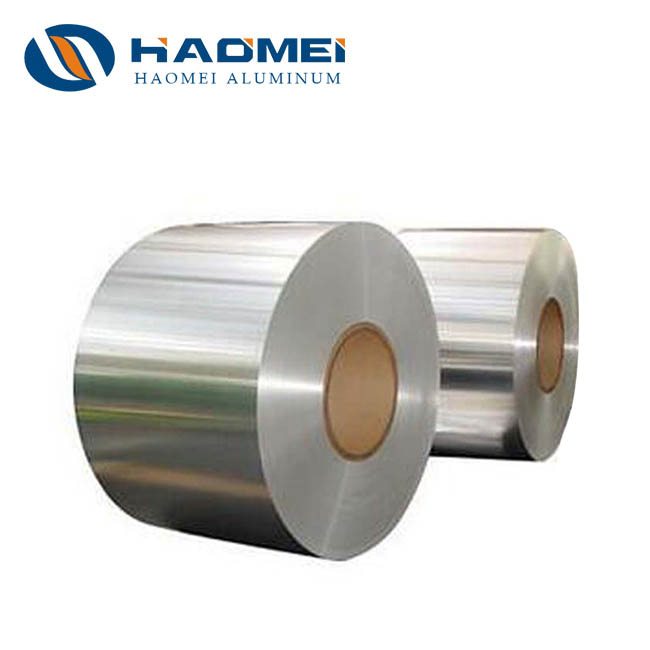
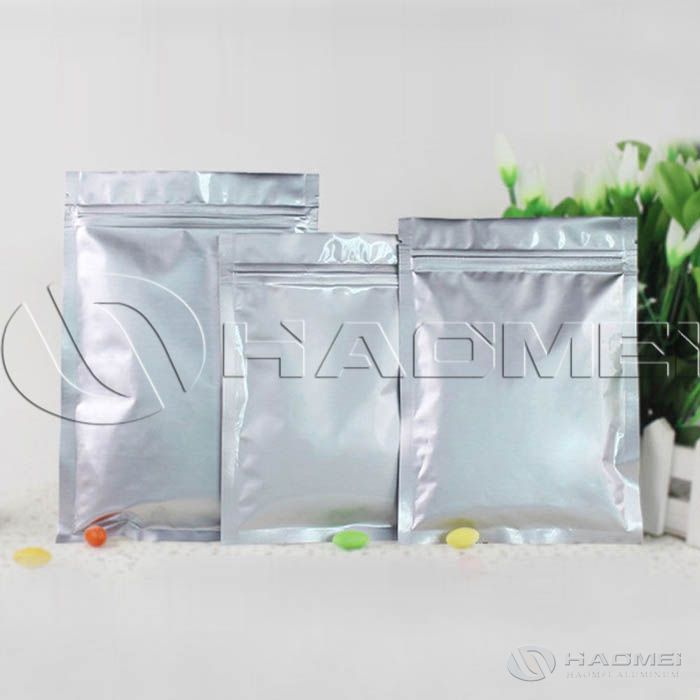


- Is It Economic to Use Aluminum Foil for Making Food ContainerApr 02, 2025
The aluminum foil roll for making food container features safety, direct heating convenience and 100% recycle....
- Diverse Uses of Food Aluminum Foil in Household LifeAug 20, 2026
Discover the versatile uses of food-grade aluminum foil in daily cooking, including BBQ grilling, steaming, ov...
- What Is Aluminum Foil Electrical ConductivityAug 26, 2025
In the industrial sector, the aluminum foil jumbo roll, thanks to its advantages such as lightweight, corrosio...
- 8006 8021 Aluminium Foil Big RollAug 09, 2023
The most common aluminum foil big roll alloys are 8011, 8021, 8006, 8079 aluminum foil. What are the uses of 8...
- 2026 China Aluminum Foil Export Price ForecastMar 03, 2026
2026 China aluminum foil jumbo roll export price forecast: Overall fluctuation with range-bound operation ($41...
Inquiry
Products Category
Latest Application
-
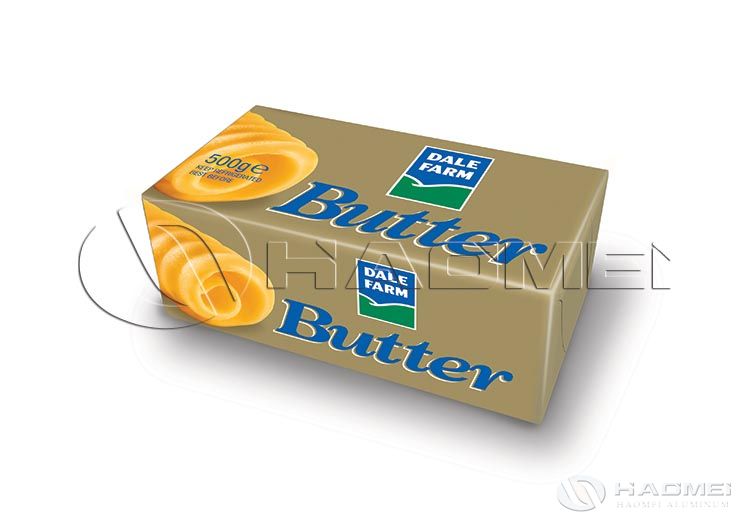 Why butter aluminum foil is neededButter aluminum foil blocks oxygen, moisture, and light, effectively preventing butter from oxidizing and spoiling, preserving nutrients, and significantly extending its shelf life. High-end products can see their sh
application
Why butter aluminum foil is neededButter aluminum foil blocks oxygen, moisture, and light, effectively preventing butter from oxidizing and spoiling, preserving nutrients, and significantly extending its shelf life. High-end products can see their sh
application
-
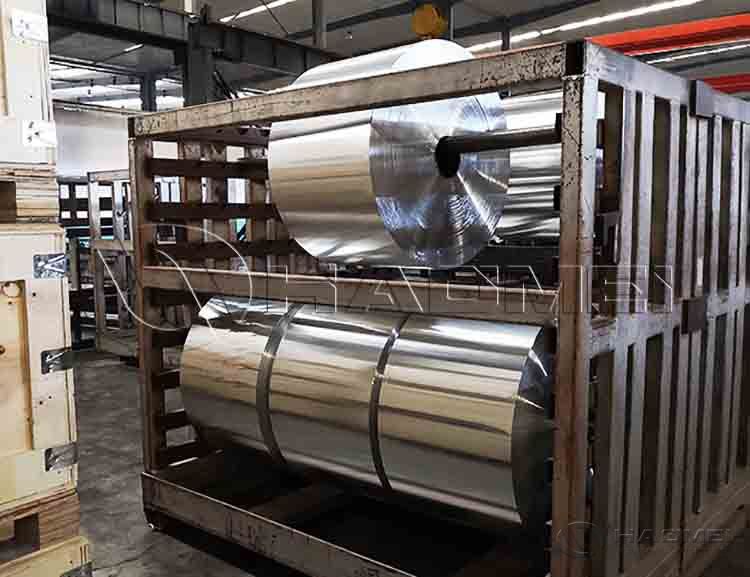 Cables are usually composed of conductors, insulation layers, shielding layers, and sheaths. Aluminum foil for cable is generally located outside the insulation layer as part of the shielding layer. It fits tightly to the surface of the insulation la
application
Cables are usually composed of conductors, insulation layers, shielding layers, and sheaths. Aluminum foil for cable is generally located outside the insulation layer as part of the shielding layer. It fits tightly to the surface of the insulation la
application
-
Aluminum Gold Foil Paper For Chocolate Wrapping
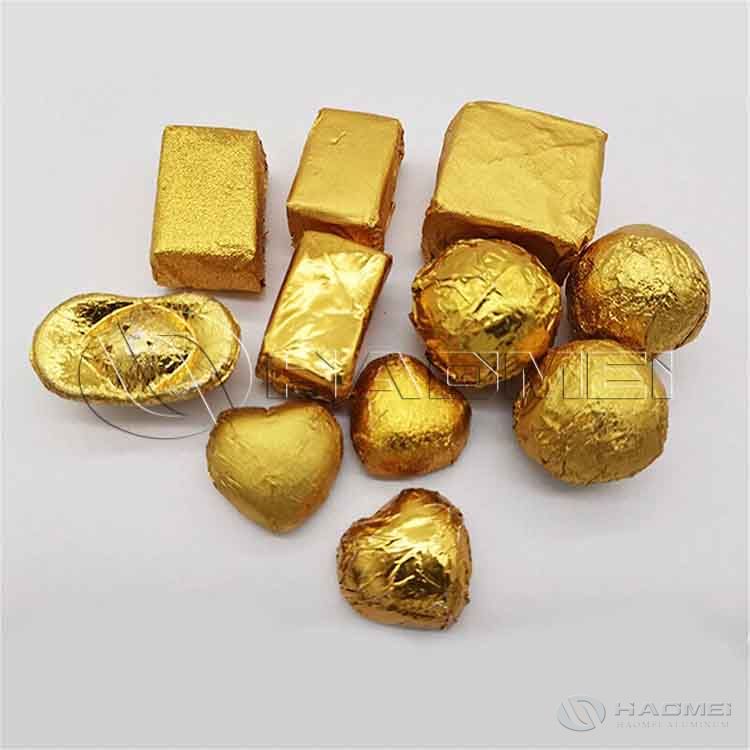 When is aluminum foil used for chocolate wrappingThe use of aluminium foil food for chocolate can be traced back to the early 20th century. In 1911, Swiss candy companies began to wrap chocolate with aluminum foil, gradually replacing the tin foil. T
application
When is aluminum foil used for chocolate wrappingThe use of aluminium foil food for chocolate can be traced back to the early 20th century. In 1911, Swiss candy companies began to wrap chocolate with aluminum foil, gradually replacing the tin foil. T
application
-
PVC Rigid Film and Aluminum Foil for Medicine Packaging
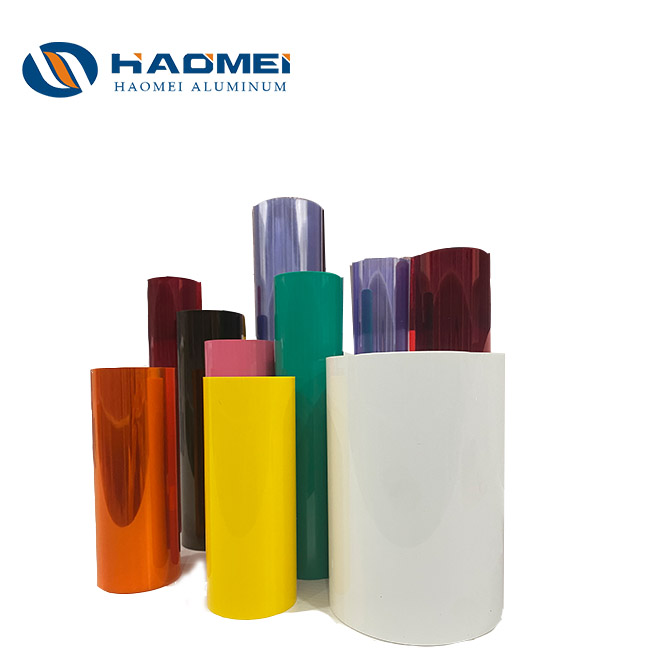 Haomei Aluminum provides different types of aluminum foil and plastic rigid films like PTP aluminum foil, cold forming foil, tropical foil, PVC rigid film, PE/PET film,etc. Best Price! Inquire now.
application
Haomei Aluminum provides different types of aluminum foil and plastic rigid films like PTP aluminum foil, cold forming foil, tropical foil, PVC rigid film, PE/PET film,etc. Best Price! Inquire now.
application
-
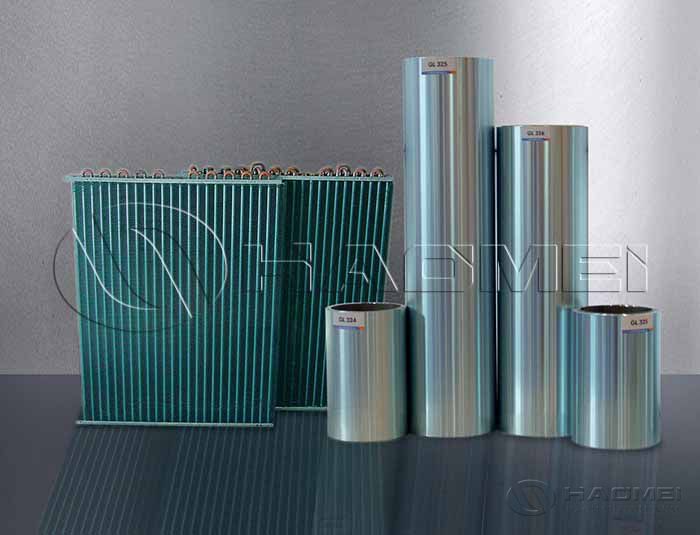 Haomei Aluminum offers you different colors of air conditioner aluminum foil like hydrophilic aluminum foil, including1100/ 3003 /8006/8011 aluminum foil,etc. Learn more.
application
Haomei Aluminum offers you different colors of air conditioner aluminum foil like hydrophilic aluminum foil, including1100/ 3003 /8006/8011 aluminum foil,etc. Learn more.
application
Latest Blog
-
 Specify 8011 aluminium foil with practical chemistry, pinhole, temper, testing and packaging checks for reliable food and pharmaceutical conversion.
Blog
Specify 8011 aluminium foil with practical chemistry, pinhole, temper, testing and packaging checks for reliable food and pharmaceutical conversion.
Blog
-
3003, 8011 and 8006 Aluminum Foil for Food Packing
 In the food packaging sector, aluminum foil is widely used for products such as composite flexible packaging, containers, meal boxes, sealing lids, and baking packaging due to its excellent barrier properties, light-shielding capabilities, heat resistance
Blog
In the food packaging sector, aluminum foil is widely used for products such as composite flexible packaging, containers, meal boxes, sealing lids, and baking packaging due to its excellent barrier properties, light-shielding capabilities, heat resistance
Blog
-
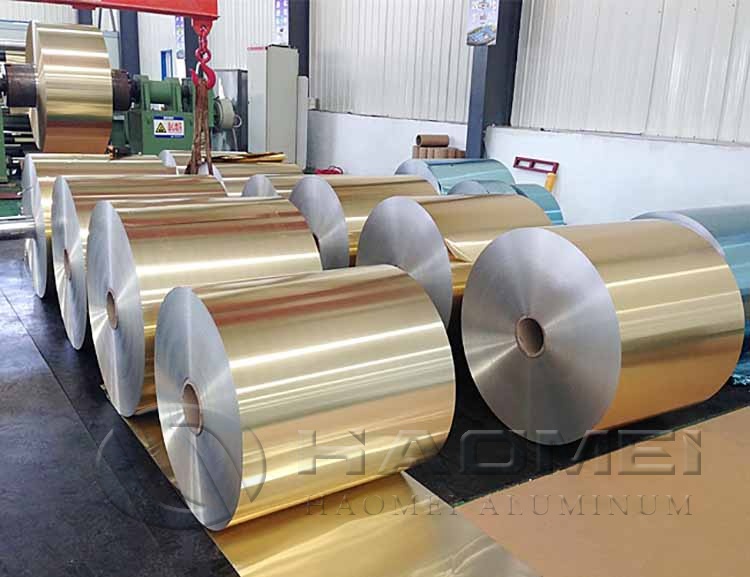 Select air conditioner foil for durable heat-exchanger fins: alloys, hydrophilic coatings, test methods, tolerances, and order specifications for HVAC units.
Blog
Select air conditioner foil for durable heat-exchanger fins: alloys, hydrophilic coatings, test methods, tolerances, and order specifications for HVAC units.
Blog
-
Aluminum Foil Jumbo Roll for Flexible Packaging Laminates
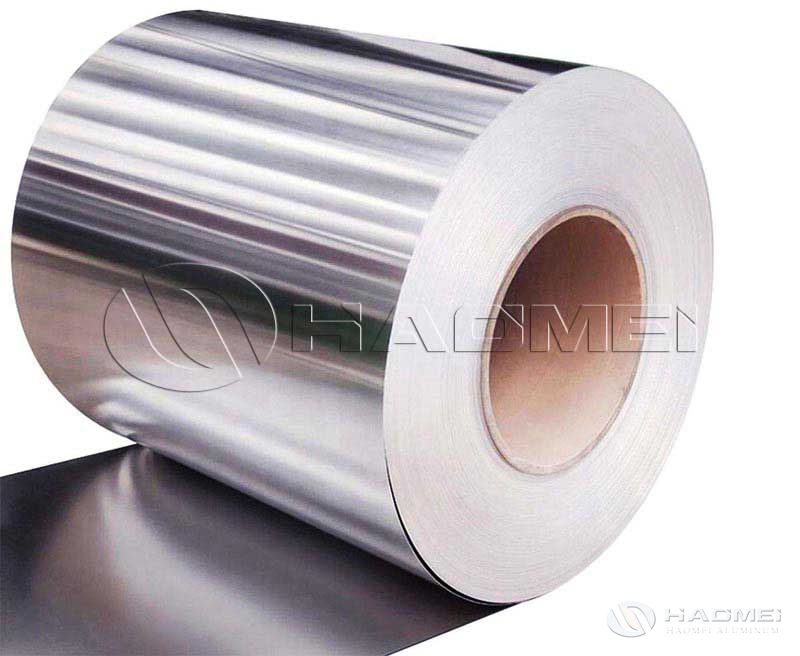 Compare 1235 pure aluminum & 8011 alloy foil jumbo rolls for flexible packaging lamination. Learn their differences in material properties, performance, pros & cons, and key application scenarios to choose the right foil for food, pharmaceutical & consume
Blog
Compare 1235 pure aluminum & 8011 alloy foil jumbo rolls for flexible packaging lamination. Learn their differences in material properties, performance, pros & cons, and key application scenarios to choose the right foil for food, pharmaceutical & consume
Blog
-
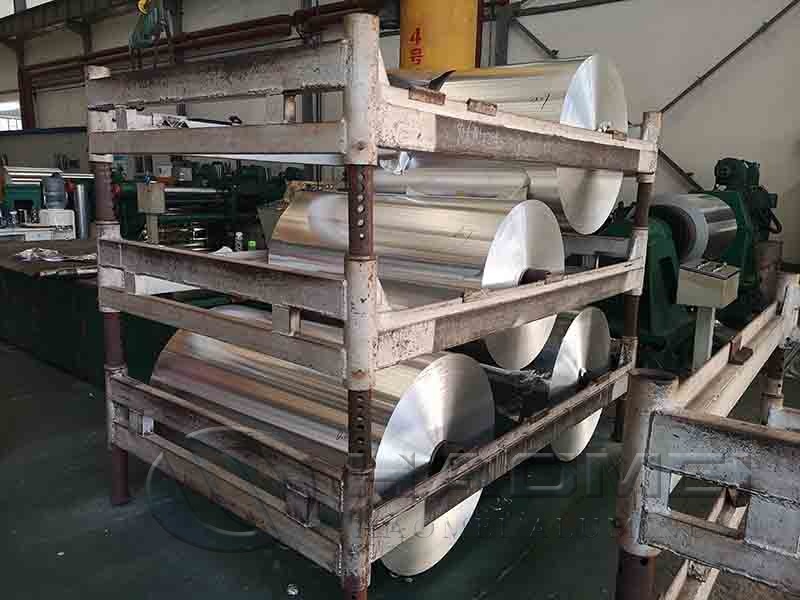 Plan year-end capacitor production with specified aluminum foil: purity, temper, surface controls, test documents, and shipment timing that reduce line risk.
Blog
Plan year-end capacitor production with specified aluminum foil: purity, temper, surface controls, test documents, and shipment timing that reduce line risk.
Blog

Haomei Aluminum CO., LTD.
Tel/Whatsapp: +86-15978414719
Email: sale@alumhm.com
Website: https://www.alumfoils.com
Xin'an Industrial Assemble Region,Luoyang,Henan Province,China
Office Add: 1103, No.14 Waihuan Road, CBD, Zhengzhou, China