Aluminum Foil Specification for Food Container
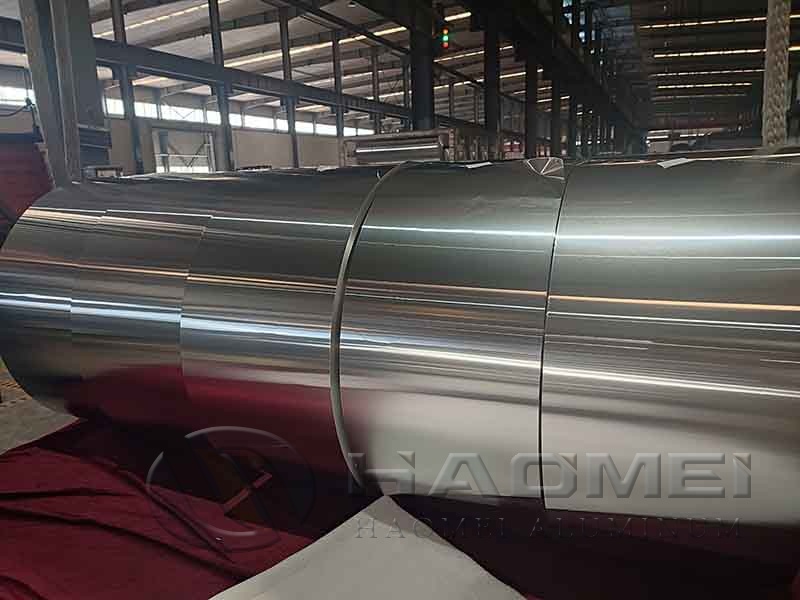
Container aluminum foil for trays and pans: learn alloy choices, tempers, thickness, coatings, forming performance, and quality checks for stable production.
Food tray and pan producers often use the term container aluminum foil to describe a forming-grade material designed for deep drawing, embossing, and crimping without tearing. Confusion usually comes from mixing up household kitchen wrap with rigid tray stock, or from choosing an alloy and temper that looks right on paper but fails during press forming.

What makes foil suitable for containers
Container stock is engineered around one core need: stable formability at high speed. In practical terms, your team cares most about tear resistance during draw, consistent rim strength for lidding, and predictable appearance after embossing.
Key performance points that typically matter in production and complaints handling:
Forming window: the ability to draw and emboss across normal press variations without edge splits.
Pinholes and micro cracks: critical for leakage and staining risk, especially after forming.
Surface quality: cleanliness, low oil residue, and uniform gloss or matte to match branding.
Gauge control: tight thickness tolerance reduces weight variance and helps stable tooling clearance.
Heat resistance: stable shape for baking or reheating, including rim retention.
Common confusion: alloy vs. temper vs. thickness
Alloy affects strength, corrosion behavior, and how the metal work hardens.
Temper describes the hardness condition, which strongly drives drawability.
Thickness drives rigidity and final container feel, but it cannot compensate for a poor alloy temper match.
Alloy and temper options used for tray stock
Most container applications rely on 3xxx and 8xxx series aluminum due to their balance of strength and formability. Selection depends on depth of draw, required stiffness, and whether the product is lacquered, printed, or bare.
Typical selection matrix
| Application need | Common alloys used | Typical temper focus | Why it is chosen |
|---|---|---|---|
| Standard shallow trays, bakery pans | 8011, 8006 | O, H22, H24 | Good forming stability with efficient cost structure |
| Deeper draw, strong rim, better anti crack margin | 3003, 3004 | H24, H26 | Higher strength with controlled work hardening, supports rim and stacking |
| High rigidity feel at similar gauge | 3004, 5052 | H24, H26 | Stronger walls and rim, helpful for premium trays |
| Lidding compatibility and clean surface requirements | 8011, 8021 | O, H22 | Often paired with lacquer and controlled surface chemistry |
For product specific references, many tray operations choose 8006 Aluminium Foil for Container where a stable forming window is needed for consistent output. For stronger rims and improved stiffness, lines may also evaluate 3004 Aluminum Foil for Container and Electronics depending on tooling design and container geometry.
Specs that directly impact forming performance
Below are the specifications that most often decide whether the roll runs smoothly or triggers downtime.
Thickness and tolerance
Thickness is usually specified by container size and required rigidity. What matters operationally is not only nominal gauge but also thickness tolerance and profile across the width. Poor profile can show up as one side splitting sooner, uneven wrinkles, or unstable flange curl.
Mechanical properties and anisotropy
Your forming results depend on yield strength, elongation, and directional behavior from rolling. When comparing suppliers, ask for mechanical property ranges and test direction definitions. This helps prevent the classic issue where a trial coil forms well but a later batch tears due to different hardness or texture.
Surface condition, oil, and cleanliness
Rolling oil type and amount influence staining, lacquer adhesion, and die pick up.
Surface cleanliness matters for food contact coatings and for consistent embossing appearance.
If food contact use is required, align coating or lacquer systems with applicable regulations in your market. Confirm that declarations of compliance are issued by the coating supplier or converter and that test methods and limits are clearly stated.
Lacquered vs. bare tray stock
| Option | Advantages | Watch outs |
|---|---|---|
| Bare aluminum | Simpler supply chain, good heat transfer | Higher risk of staining with salty or acidic foods, appearance can vary |
| One side lacquer | Better food contact protection, improved release | Coating integrity after forming must be validated |
| Two side lacquer | Best stain protection and appearance control | More sensitivity to forming cracks and coating cost |
Quality checks bulk purchasing teams rely on
When ordering larger volumes, consistency is usually more important than peak properties. These checks reduce surprises during scale up.
Incoming inspection items that correlate with press issues
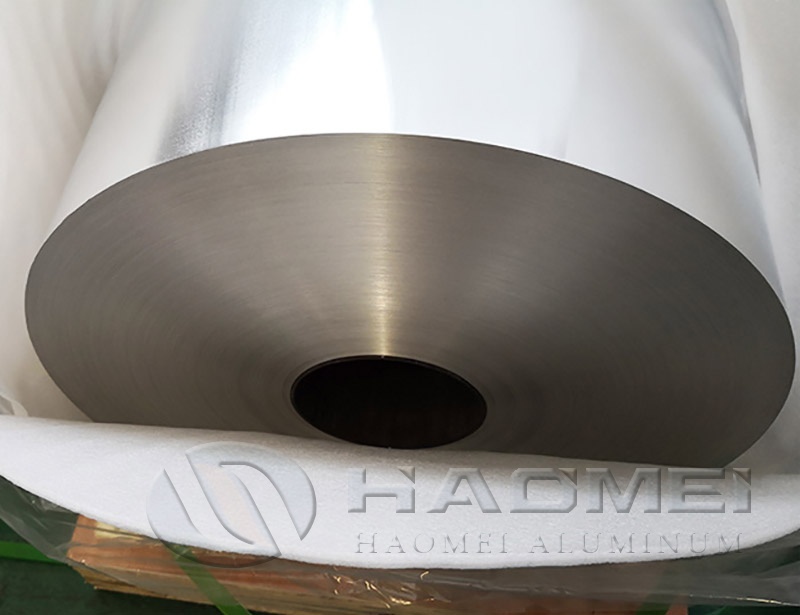
Gauge and profile mapping across width.
Pinhole count methodology, including test area and threshold.
Surface oil measurement method and acceptance range.
Hardness or temper verification tied to lot traceability.
Visual defect standards: roll marks, edge damage, scratches, and stains.
Packaging and handling for defect prevention
Many container plants trace defects back to logistics rather than melting or rolling.
Edge protection and proper core strength help prevent telescoping and edge dents.
Moisture control avoids oxidation stains and coating issues.
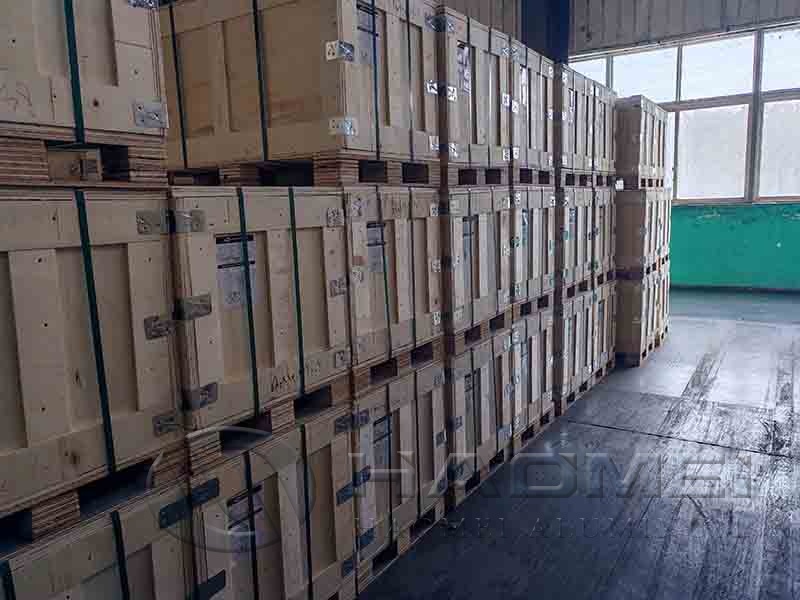
Clear identification labels should include alloy, temper, gauge, width, and lot number for traceability.
Questions procurement teams ask most often
Does thicker always mean better trays
Not always. A well matched alloy and temper can form reliably at a lower gauge, while a thicker but harder temper can crack more easily. Optimize thickness together with tooling, draw depth, and rim design.
Why do rims crack during curling
Common causes include excessive hardness, insufficient elongation, poor edge quality, or an overly aggressive curl design. Testing multiple temper ranges, and ensuring clean slit edges, typically improves curl integrity.
How do you balance strength and formability
Start from the container geometry. Deeper draws generally need higher ductility, while shallow trays can use higher strength to improve stacking. Specify property ranges, not only a single nominal value, so production stays stable across lots.
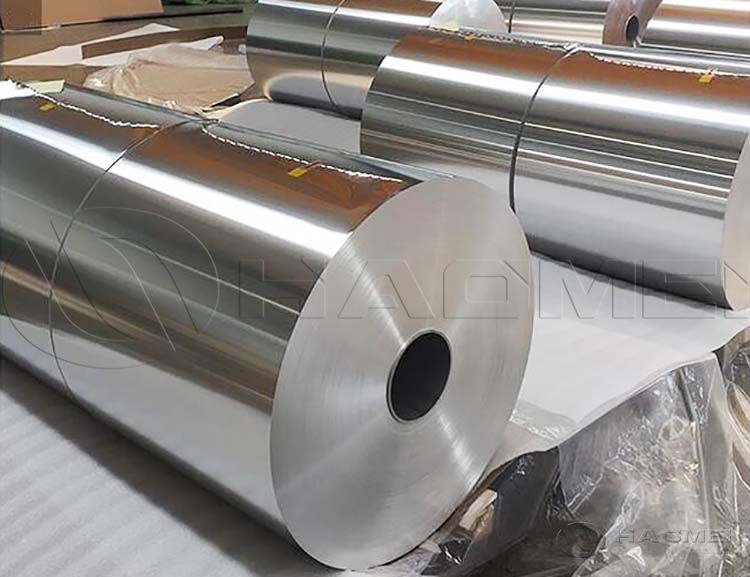
- What Is Thickness of Standard Aluminum FoilSep 25, 2023
Generally speaking, the thickness of standard aluminum foil is between 0.01mm and 0.2mm. The thickness require...
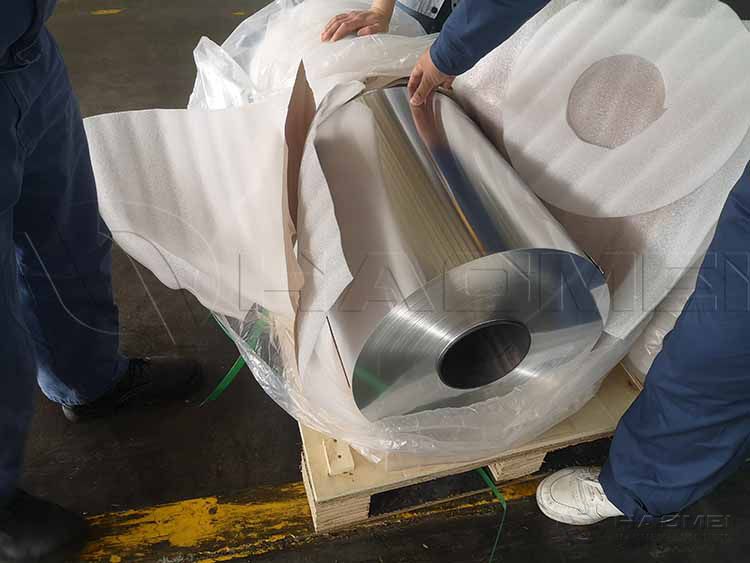
- 8006 8021 Aluminium Foil Big RollAug 09, 2023
The most common aluminum foil big roll alloys are 8011, 8021, 8006, 8079 aluminum foil. What are the uses of 8...
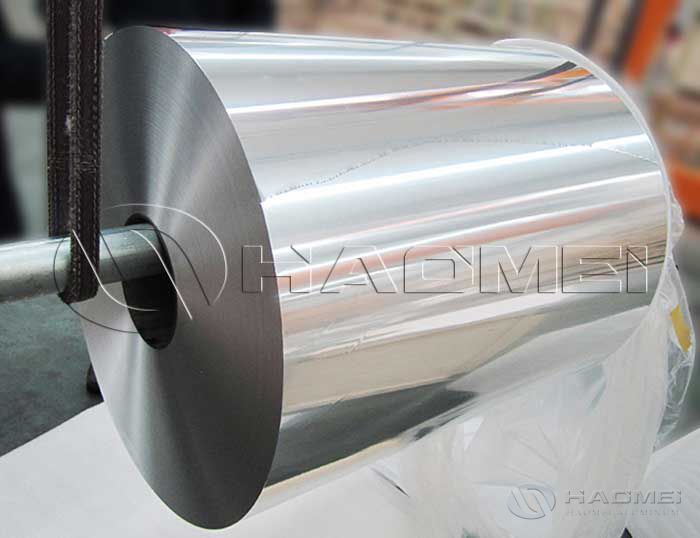
- Food Tray Aluminum FoilJun 08, 2022
Food tray aluminum foil is a very popular packaging material, including 3 series, 5 series and 8 series. Of th...
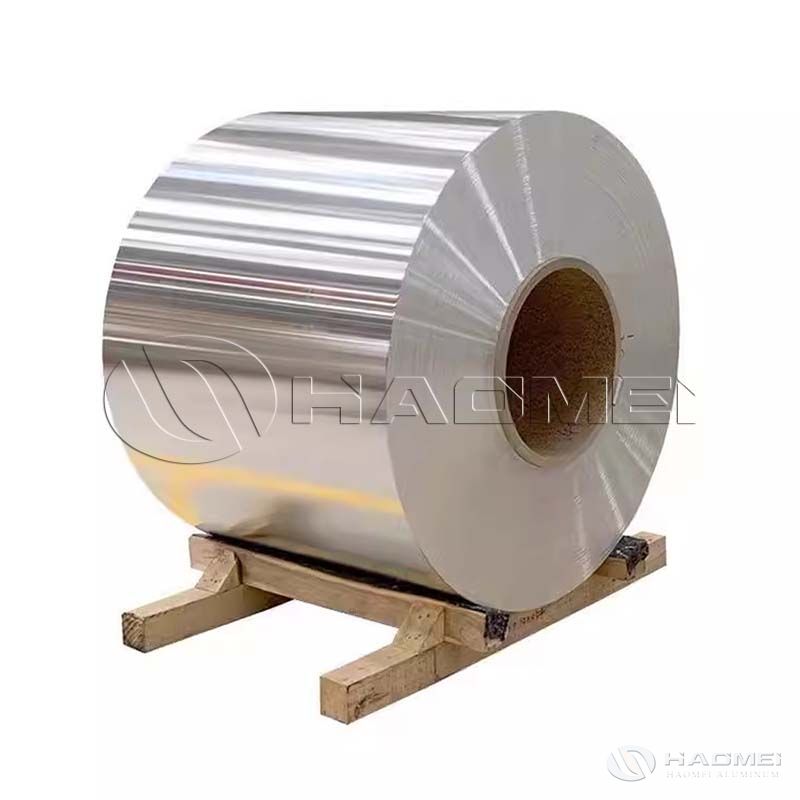
- 3003, 8011 and 8006 Aluminum Foil for Food PackingOct 15, 2026
In the food packaging sector, aluminum foil is widely used for products such as composite flexible packaging,...
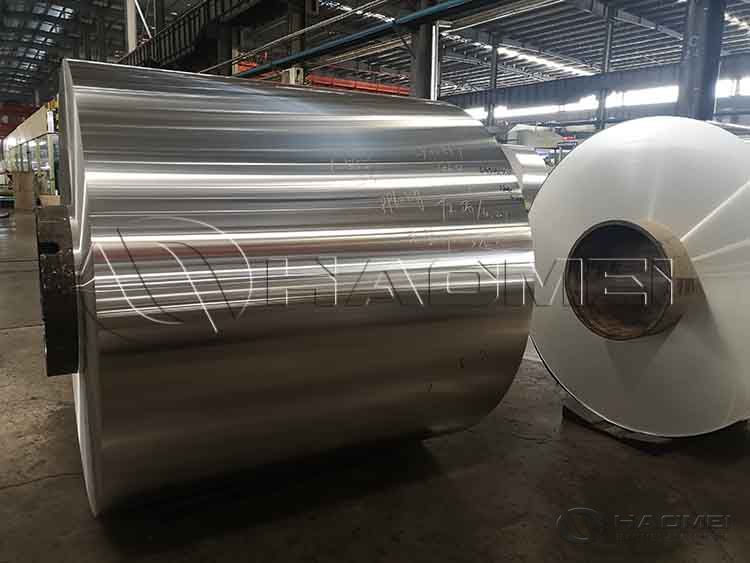
- Is It Economic to Use Aluminum Foil for Making Food ContainerApr 02, 2025
The aluminum foil roll for making food container features safety, direct heating convenience and 100% recycle....
Inquiry
Products Category
Latest Application
-
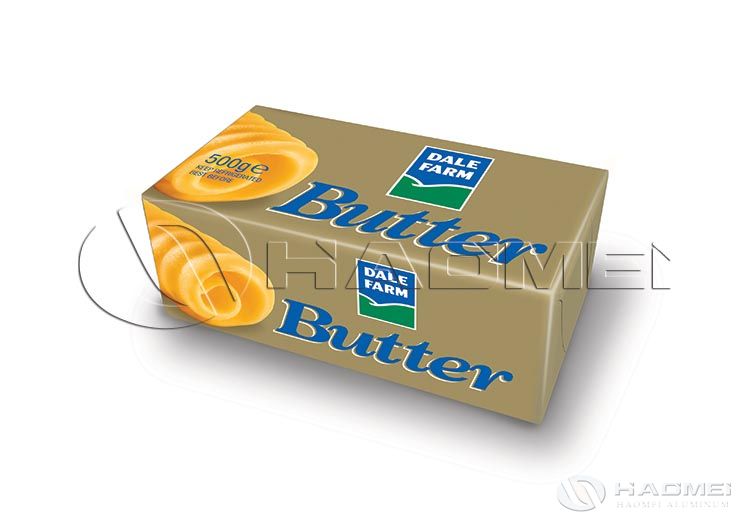 Why butter aluminum foil is neededButter aluminum foil blocks oxygen, moisture, and light, effectively preventing butter from oxidizing and spoiling, preserving nutrients, and significantly extending its shelf life. High-end products can see their sh
application
Why butter aluminum foil is neededButter aluminum foil blocks oxygen, moisture, and light, effectively preventing butter from oxidizing and spoiling, preserving nutrients, and significantly extending its shelf life. High-end products can see their sh
application
-
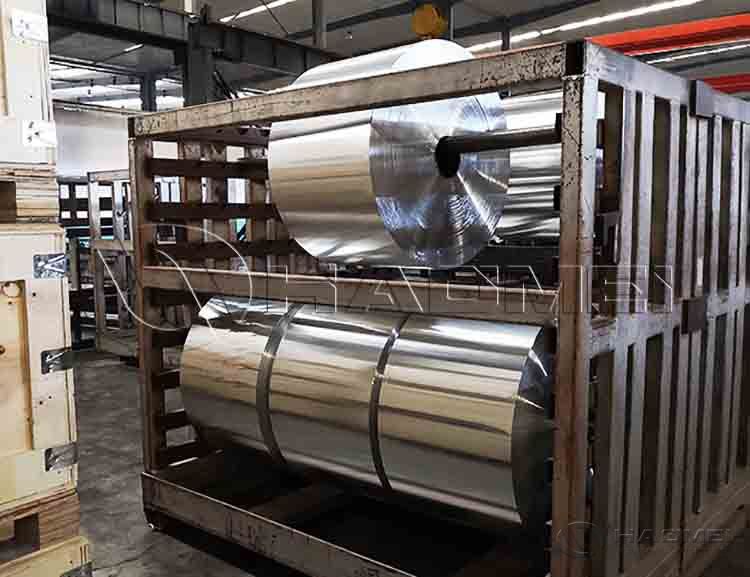 Cables are usually composed of conductors, insulation layers, shielding layers, and sheaths. Aluminum foil for cable is generally located outside the insulation layer as part of the shielding layer. It fits tightly to the surface of the insulation la
application
Cables are usually composed of conductors, insulation layers, shielding layers, and sheaths. Aluminum foil for cable is generally located outside the insulation layer as part of the shielding layer. It fits tightly to the surface of the insulation la
application
-
Aluminum Gold Foil Paper For Chocolate Wrapping
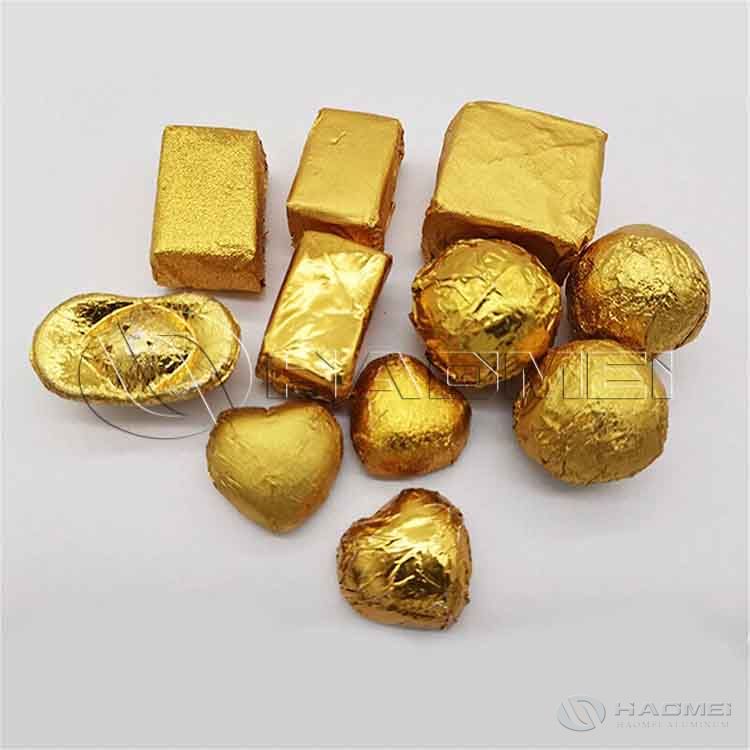 When is aluminum foil used for chocolate wrappingThe use of aluminium foil food for chocolate can be traced back to the early 20th century. In 1911, Swiss candy companies began to wrap chocolate with aluminum foil, gradually replacing the tin foil. T
application
When is aluminum foil used for chocolate wrappingThe use of aluminium foil food for chocolate can be traced back to the early 20th century. In 1911, Swiss candy companies began to wrap chocolate with aluminum foil, gradually replacing the tin foil. T
application
-
PVC Rigid Film and Aluminum Foil for Medicine Packaging
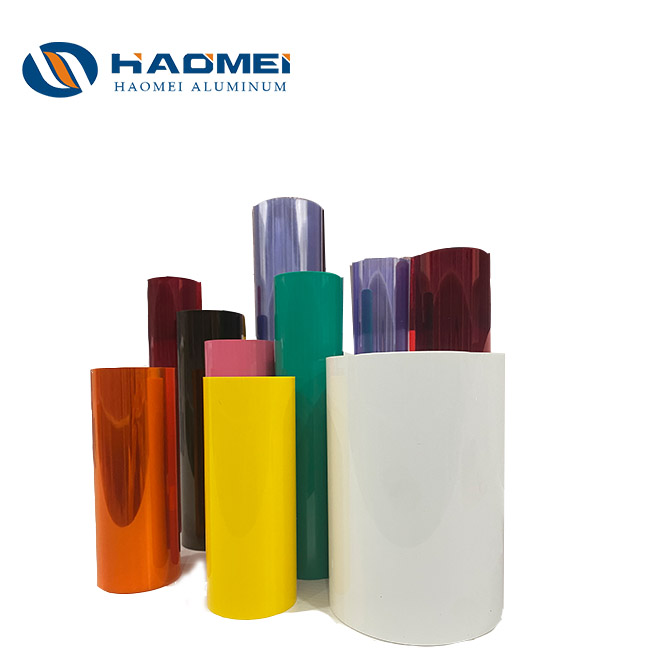 Haomei Aluminum provides different types of aluminum foil and plastic rigid films like PTP aluminum foil, cold forming foil, tropical foil, PVC rigid film, PE/PET film,etc. Best Price! Inquire now.
application
Haomei Aluminum provides different types of aluminum foil and plastic rigid films like PTP aluminum foil, cold forming foil, tropical foil, PVC rigid film, PE/PET film,etc. Best Price! Inquire now.
application
-
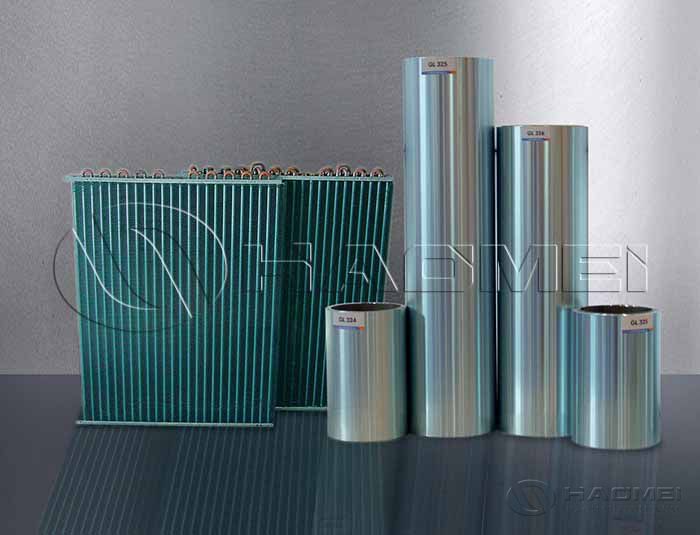 Haomei Aluminum offers you different colors of air conditioner aluminum foil like hydrophilic aluminum foil, including1100/ 3003 /8006/8011 aluminum foil,etc. Learn more.
application
Haomei Aluminum offers you different colors of air conditioner aluminum foil like hydrophilic aluminum foil, including1100/ 3003 /8006/8011 aluminum foil,etc. Learn more.
application
Latest Blog
-
 Specify 8011 aluminium foil with practical chemistry, pinhole, temper, testing and packaging checks for reliable food and pharmaceutical conversion.
Blog
Specify 8011 aluminium foil with practical chemistry, pinhole, temper, testing and packaging checks for reliable food and pharmaceutical conversion.
Blog
-
3003, 8011 and 8006 Aluminum Foil for Food Packing
In the food packaging sector, aluminum foil is widely used for products such as composite flexible packaging, containers, meal boxes, sealing lids, and baking packaging due to its excellent barrier properties, light-shielding capabilities, heat resistance
Blog
-
 Select air conditioner foil for durable heat-exchanger fins: alloys, hydrophilic coatings, test methods, tolerances, and order specifications for HVAC units.
Blog
Select air conditioner foil for durable heat-exchanger fins: alloys, hydrophilic coatings, test methods, tolerances, and order specifications for HVAC units.
Blog
-
Aluminum Foil Jumbo Roll for Flexible Packaging Laminates
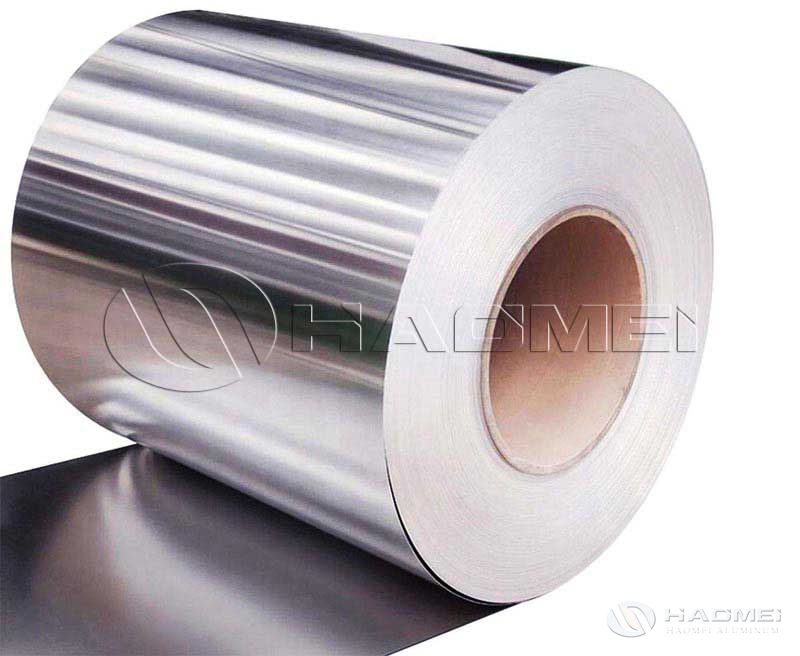 Compare 1235 pure aluminum & 8011 alloy foil jumbo rolls for flexible packaging lamination. Learn their differences in material properties, performance, pros & cons, and key application scenarios to choose the right foil for food, pharmaceutical & consume
Blog
Compare 1235 pure aluminum & 8011 alloy foil jumbo rolls for flexible packaging lamination. Learn their differences in material properties, performance, pros & cons, and key application scenarios to choose the right foil for food, pharmaceutical & consume
Blog
-
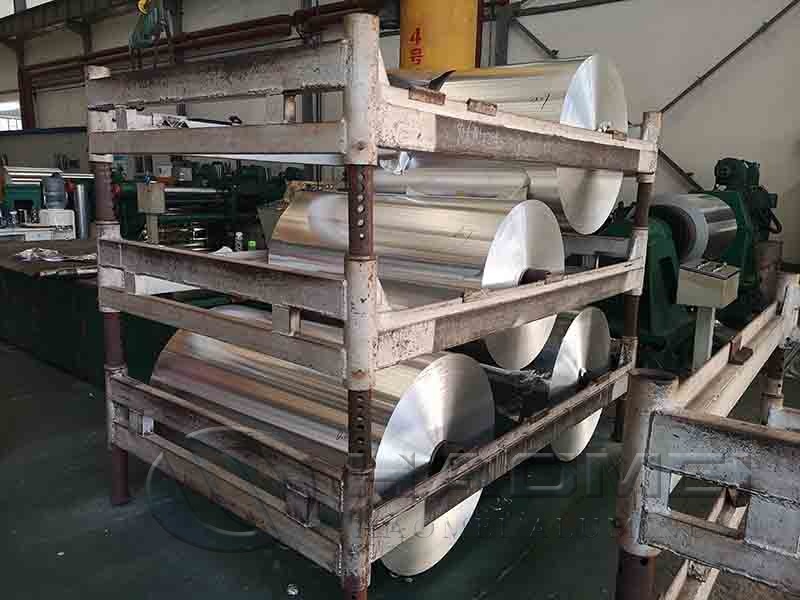 Plan year-end capacitor production with specified aluminum foil: purity, temper, surface controls, test documents, and shipment timing that reduce line risk.
Blog
Plan year-end capacitor production with specified aluminum foil: purity, temper, surface controls, test documents, and shipment timing that reduce line risk.
Blog

Haomei Aluminum CO., LTD.
Tel/Whatsapp: +86-15978414719
Email: sale@alumhm.com
Website: https://www.alumfoils.com
Xin'an Industrial Assemble Region,Luoyang,Henan Province,China
Office Add: 1103, No.14 Waihuan Road, CBD, Zhengzhou, China