Industrial Aluminum Foil Thickness Selection Guide
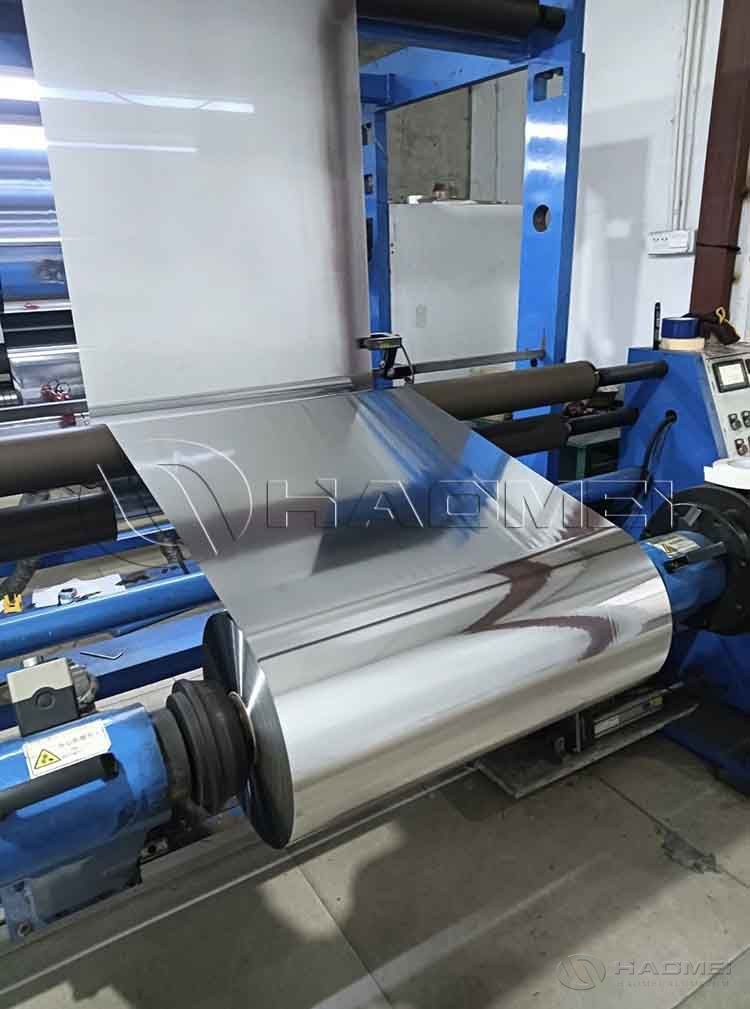
The choice of thickness for industrial aluminum foil directly determines its mechanical properties, functional adaptability, and usage cost,etc. How to choose proper thickness? Learn more.
Among the many basic materials in industrial production, industrial aluminum foil, with its excellent properties such as lightness, thinness, corrosion resistance, good thermal conductivity, and strong barrier properties, has become an indispensable "all-rounder" in many fields such as packaging, electronics, automobiles, and construction. The choice of thickness for industrial aluminum foil directly determines its mechanical properties, functional adaptability, and usage cost, and is a key factor affecting its application effectiveness.

Thickness Grading and Core Relationships of Industrial Aluminum Foil
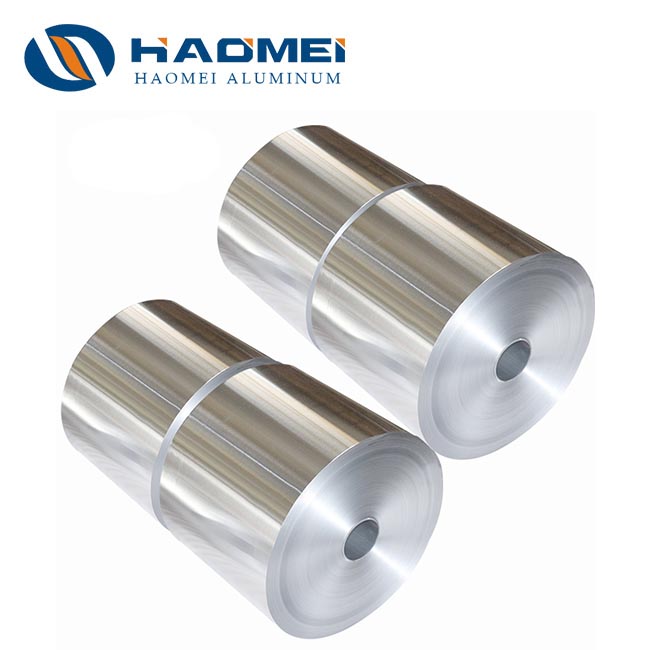
The thickness range of industrial aluminum foil is typically between 0.002mm and 0.5mm. The industry commonly categorizes it by thickness into four types: ultra-thin foil, thin foil, medium-thick foil, and thicker foil. The core characteristics of aluminum foil differ significantly across these thickness ranges:
- Ultra-thin foil (0.002mm-0.009mm): Extremely thin and light, with excellent flexibility and high adhesion, but lower mechanical strength and susceptibility to breakage. Primarily used in high-precision, high-requirement applications.
- Thin foil (0.01mm-0.05mm): Balances thinness and strength, offering excellent barrier properties and strong processing adaptability. One of the most widely used thickness ranges.
- Medium-thick foil (0.05mm-0.2mm): Higher strength, good puncture resistance and formability. Can be used directly in rigid or semi-rigid applications, with relatively moderate cost.
- Thicker foil (0.2mm-0.5mm): High strength and rigidity, able to withstand certain pressure and machining, suitable for structural or load-bearing applications. As an aluminum foil factory, Haomei Aluminum can customize aluminum foil thickness according to your need.
Thickness Requirements Table
1. Packaging
Barrier properties preferred, thickness adapted to scenario complexity. Packaging is the primary application area for industrial aluminum foil, covering sub-scenarios such as food, pharmaceuticals, and industrial consumables. Core requirements are moisture protection, light protection, sealing, and sterility. Thickness selection must consider both packaging form and protection requirements:
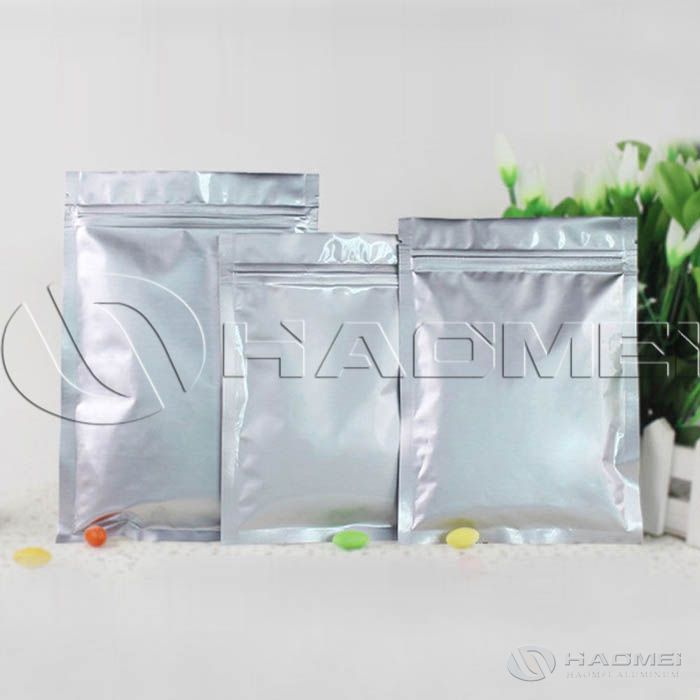
- Food packaging: Divided into flexible packaging and rigid packaging. For flexible packaging such as individual candy and chocolate wrappers, and yogurt caps, a balance between barrier properties and flexibility is required. A thickness of 0.006mm-0.015mm (ultra-thin foil/thin foil) is recommended. Beer bottle sealing foil commonly uses 0.009mm-0.015mm 8011 aluminum foil, which provides both sealing and easy opening.
For rigid packaging such as aluminum foil food containers and baking containers, formability and puncture resistance are required. A thickness of 0.03mm-0.12mm (thin foil/medium-thick foil) is recommended, commonly using 3003 and 8011 alloys, which can withstand high-temperature baking and impacts during transportation.
- Pharmaceutical Packaging: Extremely high requirements for sterility, moisture resistance, and safety. Core products are PTP pharmaceutical aluminum foil (blister packaging) and bottle cap sealing foil. PTP aluminum foil needs to balance tearability and barrier properties, with a recommended thickness of 0.012mm-0.026mm (thin foil).
Commonly used alloys are 8011 and 8021, and it must pass microbial limit testing and heavy metal leaching tests. Aluminum-aluminum pharmaceutical foil (thickened pharmaceutical foil) is used for pharmaceutical packaging with higher requirements, and its thickness can reach 0.09mm-0.15mm (medium-thick foil).
- Industrial consumable packaging: such as cable packaging and equipment moisture-proof packaging, requires a certain level of protection and breakage resistance. A thickness of 0.02mm-0.05mm (thin foil) is recommended, commonly using 1235 and 1100 alloys, which can effectively isolate moisture and impurities.
2. Electronics Field
The electronics field has extremely high requirements for the purity and thickness uniformity of aluminum foil. The core requirements are conductivity, insulation, and shielding. Thickness deviation directly affects the performance stability of electronic components. In some applications, a thickness deviation of ≤±4% (high-precision standard) is even required.
- Electrolytic Capacitors: This is a core application in the electronics field. The aluminum foil needs to undergo etching and formation treatments to increase the surface area and improve capacitor performance. The cathode foil thickness is 0.018mm-0.050mm (thin foil), while the capacitor foil (used for the anode) is even thinner, only 0.002mm-0.0045mm (ultra-thin foil), commonly using high-purity 1235 alloy with a purity ≥99.6%.
- Power Batteries: As the positive electrode current collector in lithium-ion batteries, aluminum foil needs to balance lightweight design and conductivity. Thickness directly affects battery energy density; a thickness ≤0.012mm (ultra-thin foil) is recommended. Currently, the mainstream product in the industry is 0.008mm-0.012mm, which effectively reduces battery weight and improves range.
- Electromagnetic Shielding: Used for circuit shielding in high-frequency electronic equipment to prevent signal interference. A thickness of 0.01mm-0.03mm (thin foil) is recommended. The excellent conductivity of aluminum foil forms the shielding layer; the higher the adhesion, the better the shielding effect.
3. Automotive Sector
With the advancement of automotive lightweight trends, the application of aluminum foil in the automotive industry continues to increase. The core requirements are weight reduction, thermal conductivity, and sound and heat insulation. Thickness selection must balance strength and lightweight goals, typically reducing overall vehicle weight by 5%-10%:
- Heat Exchange Systems: Including automotive radiators, condensers, evaporators, etc., requiring good thermal conductivity. A thickness of 0.045mm-0.08mm (medium-thick foil) is recommended, commonly using 1100 and 8011 alloys. Currently, the aluminum content of automotive radiators has reached 40%, and annual demand continues to grow.
- Sound and Heat Insulation Layers: Used for interior sound insulation and engine compartment heat insulation, requiring sufficient strength and heat insulation. A thickness of 0.1mm-0.2mm (medium-thick foil) is recommended. Folding can create an air layer to improve heat insulation while withstanding the high-temperature environment of the engine.
- Battery Pack Components: For separators and cooling system fins in new energy vehicle battery packs, a thickness of 0.03mm-0.08mm (thin/medium-thick foil) is recommended. These components must meet both insulation and thermal conductivity requirements to ensure safe and stable battery pack operation.
4. Construction Sector
Aluminum foil in the construction sector is mainly used for thermal insulation and decoration. The core requirements are thermal insulation, weather resistance, and aesthetics. Thickness selection must consider the usage environment and structural requirements:
- Thermal Insulation Materials: Such as aluminum foil glass wool and aluminum foil corrugated cardboard, used as insulation layers for walls and roofs. Utilizing the high reflectivity of aluminum foil (up to 90%), heat transfer is reduced. A thickness of 0.04mm-0.1mm (thin/medium-thick foil) is recommended, effectively reducing building energy consumption.
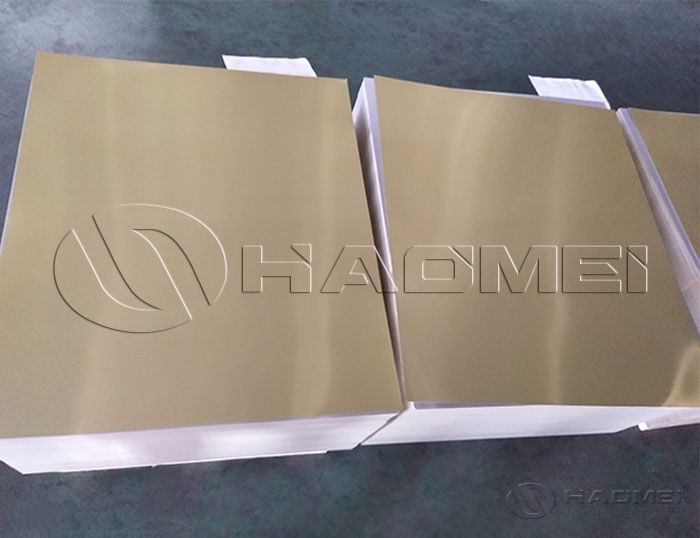
- Decorative materials: Such as brushed aluminum foil sheets and composite aluminum foil films, used for wall and ceiling decoration in commercial spaces. These require a certain degree of rigidity and corrosion resistance. A thickness of 0.1mm-0.3mm (medium-thick foil/relatively thick foil) is recommended, combining a metallic texture with durability.
- Sound insulation materials: Such as honeycomb aluminum panel core materials. These require good compressive strength and sound insulation. A thickness of 0.05mm-0.15mm (medium-thick foil) is recommended. When combined with an outer aluminum panel, they can solve the problem of traditional ceilings being prone to deformation.

- How to Use Heavy Duty BBQ FoilDec 25, 2023
How to use heavy duty bbq foil? Is it a must for grilling? How to wrap the fish to avoid the sticking? There...
- Aluminium Foil for CookingJul 01, 2026
Fresh answers to hot questions on aluminium foil for cooking: oven safety, acidic foods, air fryers, thickness...
- Different Forms of Aluminum Foil PackageOct 28, 2025
In the modern packaging industry, aluminum foil, thanks to its excellent barrier properties, ductility, and en...
- Aluminum Foil GaugeAug 06, 2026
Learn how aluminum foil gauge relates to thickness, microns, strength, applications, and ordering specificatio...
- Industrial Aluminum Foil Thickness Selection GuideJan 27, 2026
The choice of thickness for industrial aluminum foil directly determines its mechanical properties, functional...
Inquiry
Products Category
Latest Application
-
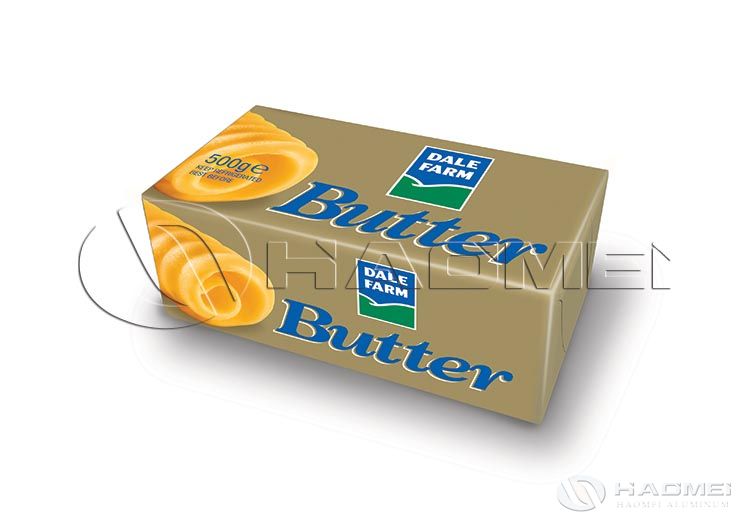 Why butter aluminum foil is neededButter aluminum foil blocks oxygen, moisture, and light, effectively preventing butter from oxidizing and spoiling, preserving nutrients, and significantly extending its shelf life. High-end products can see their sh
application
Why butter aluminum foil is neededButter aluminum foil blocks oxygen, moisture, and light, effectively preventing butter from oxidizing and spoiling, preserving nutrients, and significantly extending its shelf life. High-end products can see their sh
application
-
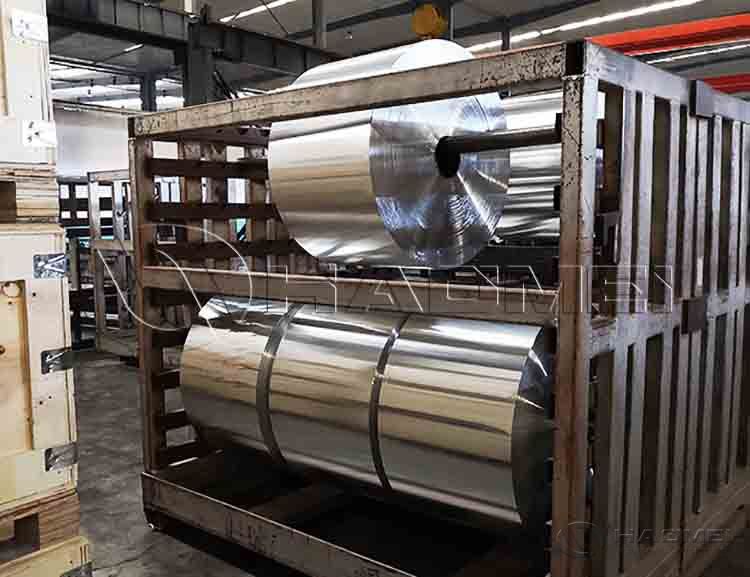 Cables are usually composed of conductors, insulation layers, shielding layers, and sheaths. Aluminum foil for cable is generally located outside the insulation layer as part of the shielding layer. It fits tightly to the surface of the insulation la
application
Cables are usually composed of conductors, insulation layers, shielding layers, and sheaths. Aluminum foil for cable is generally located outside the insulation layer as part of the shielding layer. It fits tightly to the surface of the insulation la
application
-
Aluminum Gold Foil Paper For Chocolate Wrapping
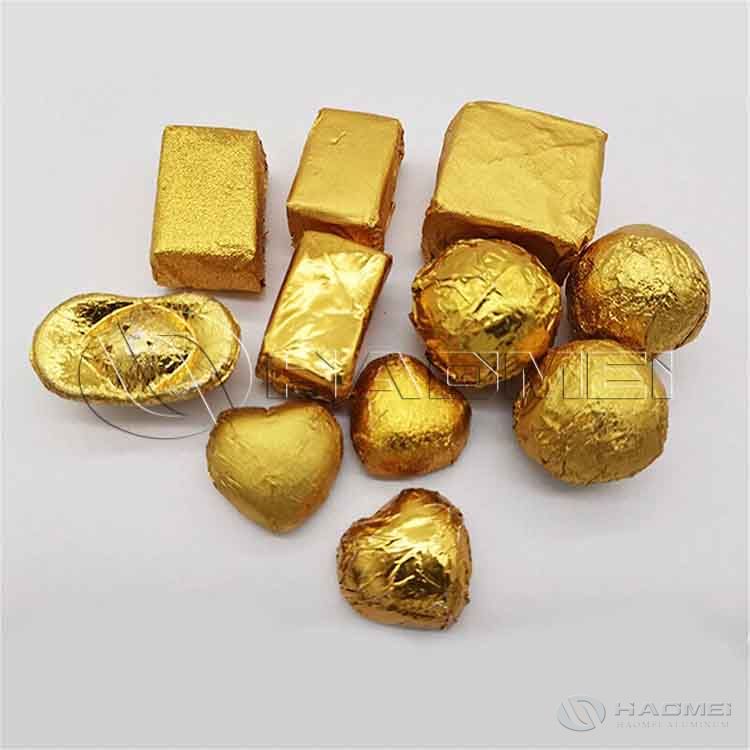 When is aluminum foil used for chocolate wrappingThe use of aluminium foil food for chocolate can be traced back to the early 20th century. In 1911, Swiss candy companies began to wrap chocolate with aluminum foil, gradually replacing the tin foil. T
application
When is aluminum foil used for chocolate wrappingThe use of aluminium foil food for chocolate can be traced back to the early 20th century. In 1911, Swiss candy companies began to wrap chocolate with aluminum foil, gradually replacing the tin foil. T
application
-
PVC Rigid Film and Aluminum Foil for Medicine Packaging
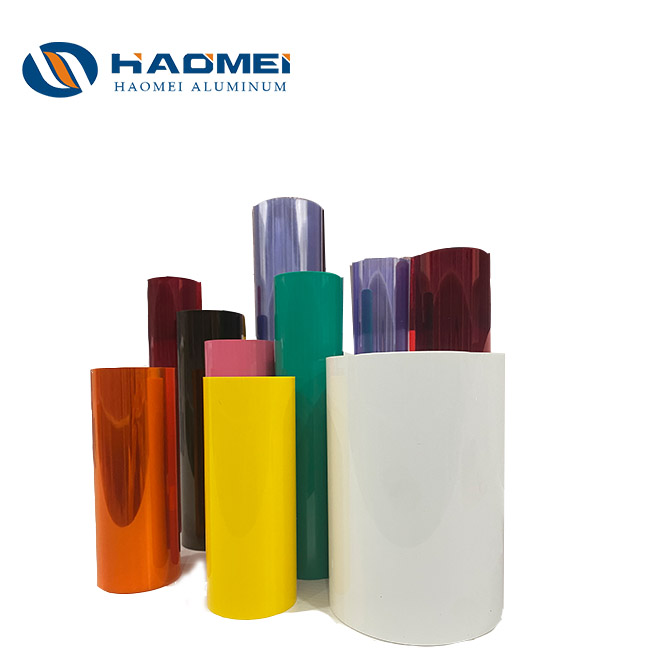 Haomei Aluminum provides different types of aluminum foil and plastic rigid films like PTP aluminum foil, cold forming foil, tropical foil, PVC rigid film, PE/PET film,etc. Best Price! Inquire now.
application
Haomei Aluminum provides different types of aluminum foil and plastic rigid films like PTP aluminum foil, cold forming foil, tropical foil, PVC rigid film, PE/PET film,etc. Best Price! Inquire now.
application
-
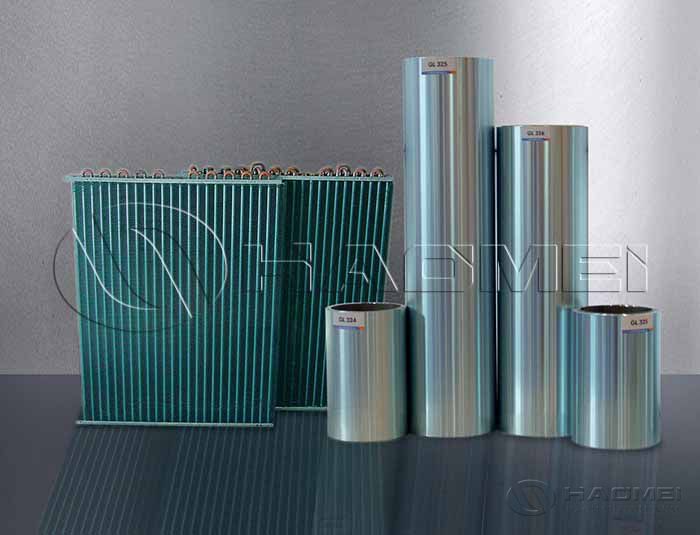 Haomei Aluminum offers you different colors of air conditioner aluminum foil like hydrophilic aluminum foil, including1100/ 3003 /8006/8011 aluminum foil,etc. Learn more.
application
Haomei Aluminum offers you different colors of air conditioner aluminum foil like hydrophilic aluminum foil, including1100/ 3003 /8006/8011 aluminum foil,etc. Learn more.
application
Latest Blog
-
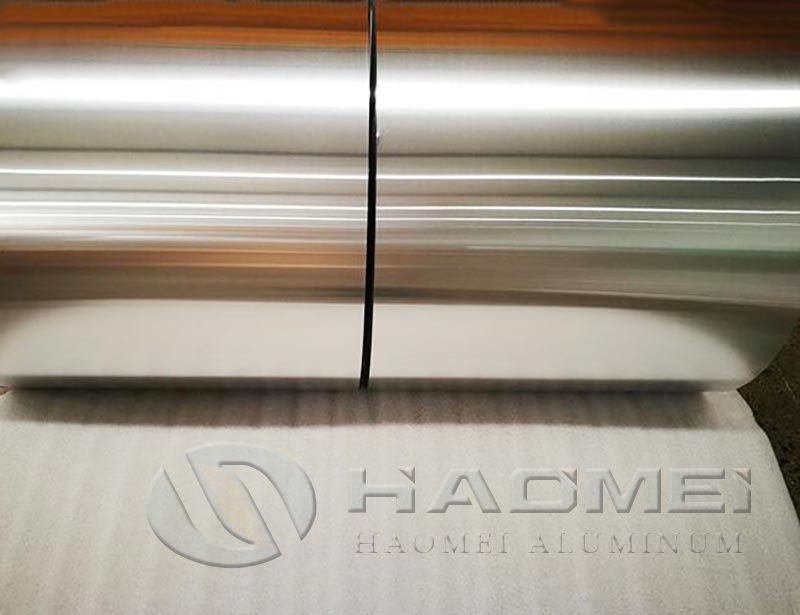 Specify 8011 aluminium foil with practical chemistry, pinhole, temper, testing and packaging checks for reliable food and pharmaceutical conversion.
Blog
Specify 8011 aluminium foil with practical chemistry, pinhole, temper, testing and packaging checks for reliable food and pharmaceutical conversion.
Blog
-
3003, 8011 and 8006 Aluminum Foil for Food Packing
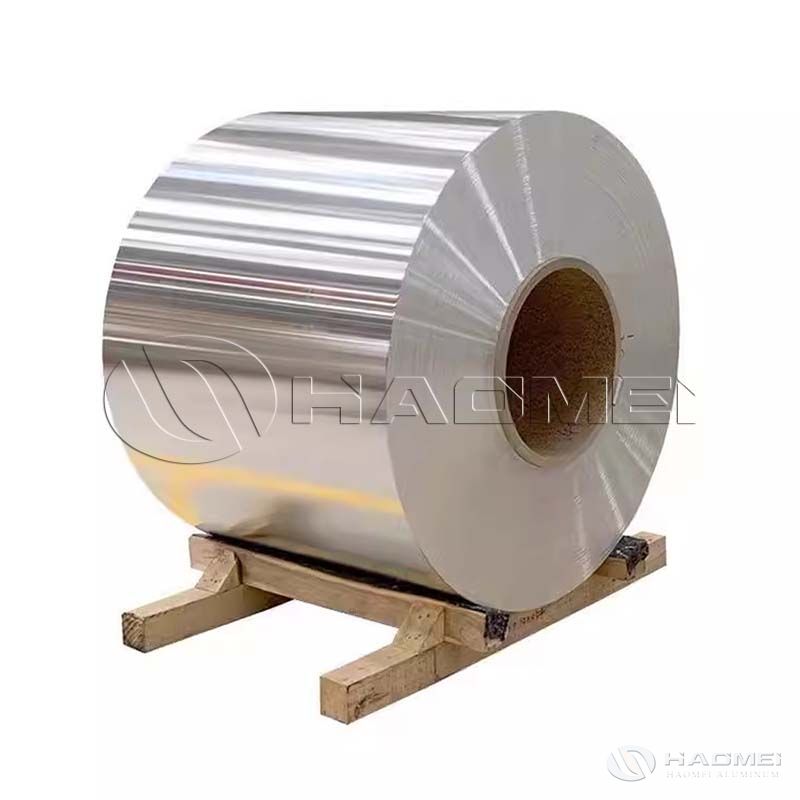 In the food packaging sector, aluminum foil is widely used for products such as composite flexible packaging, containers, meal boxes, sealing lids, and baking packaging due to its excellent barrier properties, light-shielding capabilities, heat resistance
Blog
In the food packaging sector, aluminum foil is widely used for products such as composite flexible packaging, containers, meal boxes, sealing lids, and baking packaging due to its excellent barrier properties, light-shielding capabilities, heat resistance
Blog
-
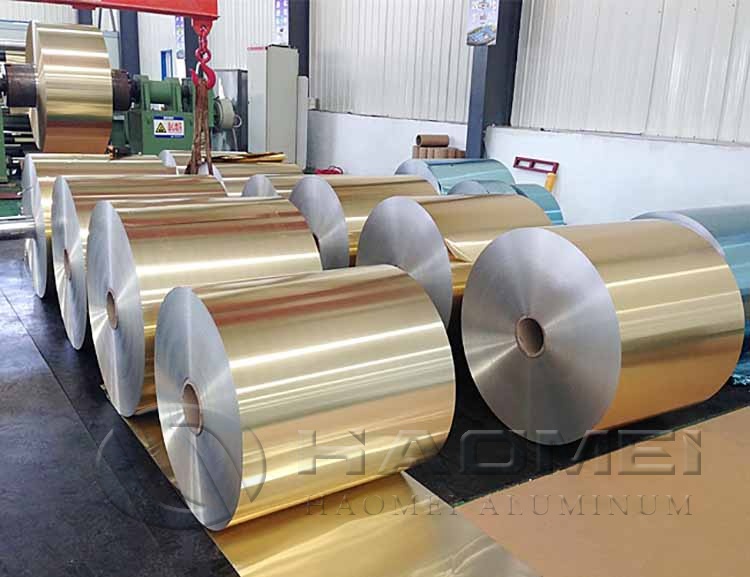 Select air conditioner foil for durable heat-exchanger fins: alloys, hydrophilic coatings, test methods, tolerances, and order specifications for HVAC units.
Blog
Select air conditioner foil for durable heat-exchanger fins: alloys, hydrophilic coatings, test methods, tolerances, and order specifications for HVAC units.
Blog
-
Aluminum Foil Jumbo Roll for Flexible Packaging Laminates
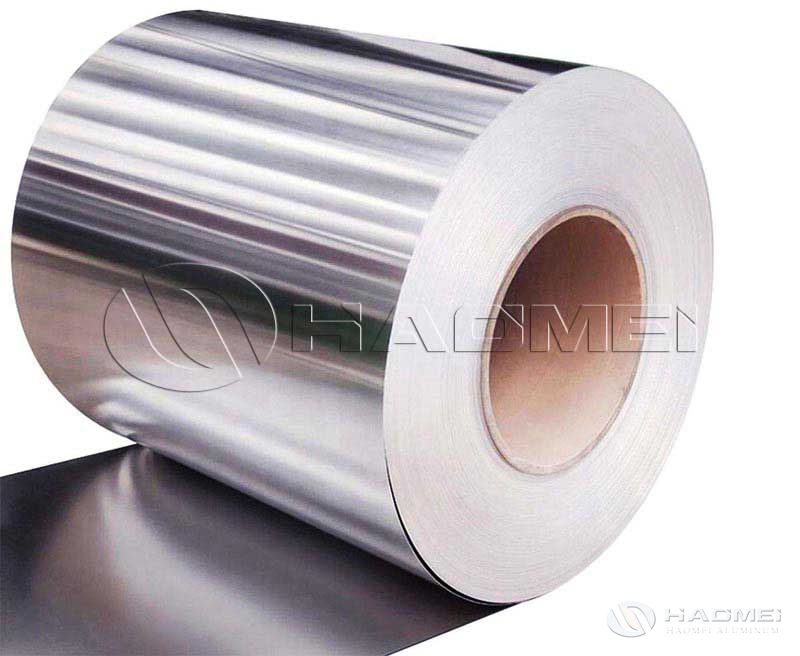 Compare 1235 pure aluminum & 8011 alloy foil jumbo rolls for flexible packaging lamination. Learn their differences in material properties, performance, pros & cons, and key application scenarios to choose the right foil for food, pharmaceutical & consume
Blog
Compare 1235 pure aluminum & 8011 alloy foil jumbo rolls for flexible packaging lamination. Learn their differences in material properties, performance, pros & cons, and key application scenarios to choose the right foil for food, pharmaceutical & consume
Blog
-
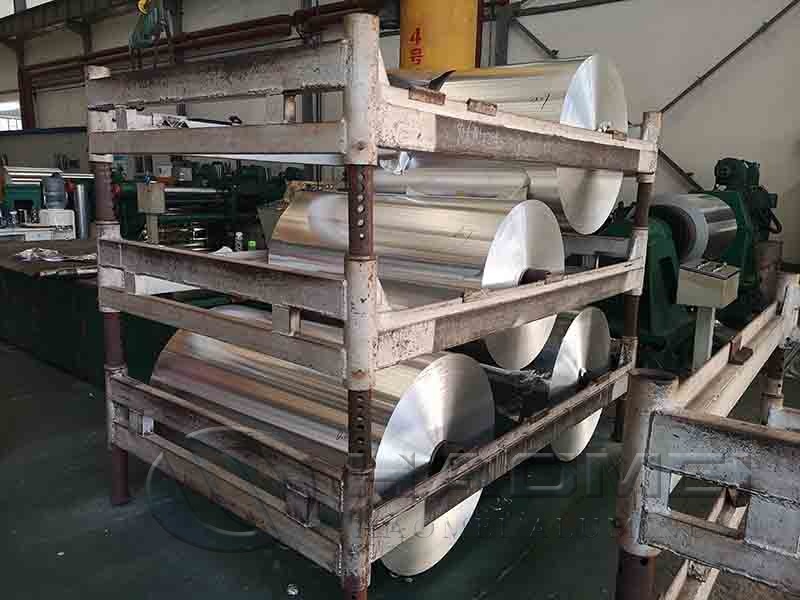 Plan year-end capacitor production with specified aluminum foil: purity, temper, surface controls, test documents, and shipment timing that reduce line risk.
Blog
Plan year-end capacitor production with specified aluminum foil: purity, temper, surface controls, test documents, and shipment timing that reduce line risk.
Blog

Haomei Aluminum CO., LTD.
Tel/Whatsapp: +86-15978414719
Email: sale@alumhm.com
Website: https://www.alumfoils.com
Xin'an Industrial Assemble Region,Luoyang,Henan Province,China
Office Add: 1103, No.14 Waihuan Road, CBD, Zhengzhou, China