Aluminum Foil for Sealing and Lid Stock
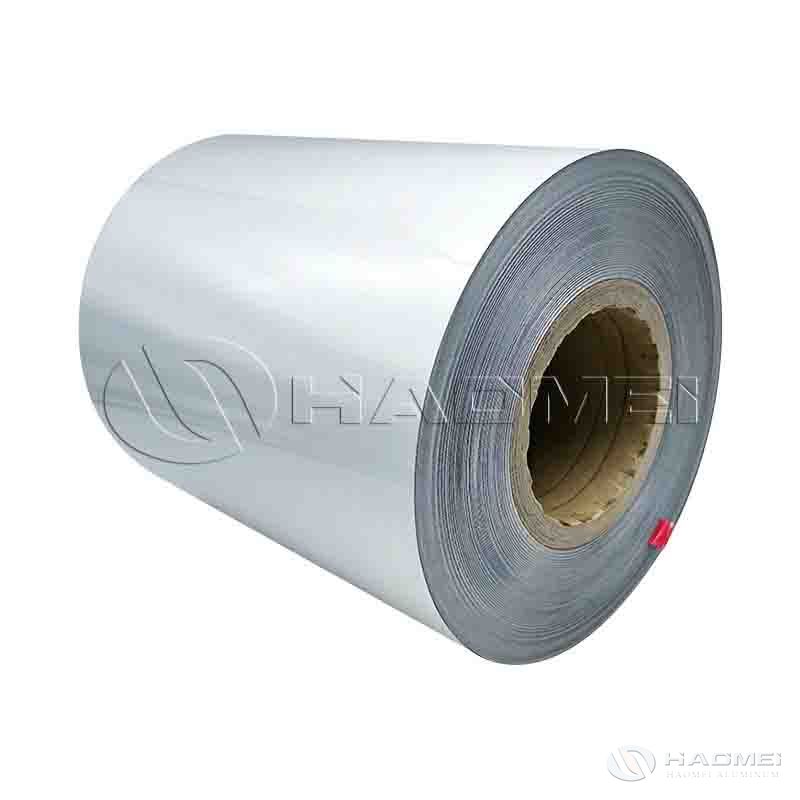
Explore the differences between 1050, 1100 (pure aluminum foil) and 8011 (alloy aluminum foil) for packaging. Learn their performance, applications in beverage/condiment/high-end product sealing, and how to choose the right grade.
In the packaging industry, aluminum foil, with its excellent barrier properties, ductility, and sealing properties, has become a core material for container sealing and lid manufacturing. Different grades of aluminum foil, due to differences in composition and performance, are suitable for different container applications.

I. 1050 and 1100 Pure Aluminum Foil
Both 1050 and 1100 aluminum foil belong to the 1-series pure aluminum foil, with aluminum contents of no less than 99.5% and 99.0% respectively, making them high-purity aluminum foil products. Their compositions are similar, and their performance differences are minimal. In sealing and lid applications, they are often grouped together, emphasizing their core advantages of being "economical, practical, and easy to process," suitable for conventional container applications with moderate performance requirements and strict cost control.
1. General Beverage Containers: Commonly used for simple sealing caps and aluminum foil for plastic and glass bottles containing juice, purified water, etc. The core requirements for these containers are preventing leakage and short-term preservation. 1050 and 1100 aluminum foil provide sufficient basic sealing performance and are cost-effective, making them suitable for mass production.
2. General Food Containers: Suitable for sealing gaskets and lids on plastic jars and cardboard boxes containing biscuits, candies, snacks, and other leisure foods. These foods are not easily spoiled and have lower requirements for moisture and oxidation prevention. 1050 and 1100 aluminum foil effectively block external dust and slight moisture. They are also easy to stamp and form into various sizes of round and square sealing gaskets to fit different container diameters.
3. Daily Necessities and Small Industrial Containers: Used for sealing caps of daily chemical products such as laundry detergent, dishwashing liquid, and shampoo, as well as sealing aluminum foil for small industrial reagent bottles (non-corrosive reagents). The core sealing principle of these containers is to prevent liquid leakage. 1050 and 1100 aluminum foil offer good flexibility, allowing for a tight fit to the bottle opening. Their resistance to common acids and alkalis meets the storage requirements of daily chemical products, while also providing high cost-effectiveness, aligning with the cost positioning of these products.
4. Low-end condiment containers: Suitable for sealing plastic bottles of common condiments such as soy sauce, vinegar, and salt with aluminum foil and simple caps. These condiments themselves have some corrosion resistance, so the corrosion resistance of the aluminum foil is not critical. The sealing performance of 1050 and 1100 aluminum foil effectively prevents condiment evaporation, and its low processing difficulty reduces packaging costs.
II. Key Differences Between 1050, 1100, and 8011 Aluminum Foil
Many people easily confuse 1050, 1100, and 8011 aluminum foils when choosing for sealing and lids. In fact, there are significant differences between the two in terms of composition, performance, and application scenarios. A detailed comparison is as follows:
1. Composition Differences: Pure Aluminum vs. Alloy Aluminum
1050 and 1100 aluminum foils are pure aluminum foils. 1050 Al foil has an aluminum content of ≥99.5%, and 1100 has an aluminum content of ≥99.0%, containing almost no other alloying elements, resulting in a pure texture. 8011 aluminum foil, on the other hand, is an alloy aluminum foil. In addition to aluminum, it contains iron, silicon, and other alloying elements. The addition of these alloying components comprehensively improves its performance, which is the most crucial difference between the two.
2. Performance Differences: Practicality vs. High-End Focus
In terms of strength, 1050 and 1100 pure aluminum foil are soft and have lower strength, making them prone to deformation during processing and exhibiting poor resistance to breakage. They are unsuitable for caps requiring frequent opening and high strength. 8011 alloy aluminum foil, on the other hand, has higher strength, better resistance to breakage, and is less prone to deformation after stamping, making it suitable for caps with complex structures and seals requiring long-term use.
Regarding corrosion and heat resistance, 1050 and 1100 pure aluminum foil have moderate corrosion resistance, only able to withstand slight corrosion in ordinary environments. They also have poor heat resistance, easily softening at high temperatures, affecting sealing performance. 8011 aluminum foil offers superior corrosion and heat resistance, adapting to complex environments such as humidity and acids/alkalis. It is also less prone to softening at high temperatures, exhibiting more stable heat-sealing performance, making it suitable for product packaging requiring high-temperature sterilization and long-term storage.
In terms of barrier properties, 1050 and 1100 pure aluminum foil possess basic moisture-proof and oxygen-barrier properties, but the effect is generally limited, only meeting short-term preservation needs. 8011 aluminum foil offers stronger barrier properties, effectively blocking air, moisture, and light, extending product shelf life, and is suitable for products with high preservation requirements, such as food and pharmaceuticals.
3. Differences in Cost and Application Positioning: Economical and General-Purpose vs. High-End Specialized
1050 and 1100 aluminum foil, due to their simple composition and mature production process, have lower costs and are marketed as "economical and practical." They are suitable for conventional containers with low performance requirements and a focus on cost-effectiveness, such as ordinary beverages, snack foods, and low-end daily chemical products.
8011 alloy aluminum foil, due to the addition of alloying elements and a more complex production process, has slightly higher costs and is marketed as "high-end specialized." It is suitable for high-end food, pharmaceuticals, and alcoholic beverages with higher requirements for sealing, preservation, and safety, making it the preferred material for high-end packaging.
- Where to Buy Aluminum Foils for Li-ion BatteriesOct 11, 2022
Battery aluminum foil is mainly used as current collectors of lithium batteries and sodium batteries. 300-450...
- Aluminum Foil Large Rolls for CableMay 10, 2023
The surface quality of aluminum foil is the most important factor affecting the peel strength of the cable foi...
- What Are Uses of Industrial and Commercial Aluminum FoilOct 11, 2023
The industrial aluminum foil and commercial aluminum foils are widel yused in packaging, electrical materials...
- Aluminum Foil Thickness for Barbecue and BakingMay 13, 2026
Confused about how to choose the right aluminum foil thickness for barbecue and baking? This guide breaks down...
- What Are Popular Uses of Aluminum Foil Alloy 1235Oct 21, 2025
1235 aluminum foil, with its high purity (typically aluminum content exceeding 99.35%), excellent ductility, s...
Inquiry
Products Category
Latest Application
-
 Why butter aluminum foil is neededButter aluminum foil blocks oxygen, moisture, and light, effectively preventing butter from oxidizing and spoiling, preserving nutrients, and significantly extending its shelf life. High-end products can see their sh
application
Why butter aluminum foil is neededButter aluminum foil blocks oxygen, moisture, and light, effectively preventing butter from oxidizing and spoiling, preserving nutrients, and significantly extending its shelf life. High-end products can see their sh
application
-
 Cables are usually composed of conductors, insulation layers, shielding layers, and sheaths. Aluminum foil for cable is generally located outside the insulation layer as part of the shielding layer. It fits tightly to the surface of the insulation la
application
Cables are usually composed of conductors, insulation layers, shielding layers, and sheaths. Aluminum foil for cable is generally located outside the insulation layer as part of the shielding layer. It fits tightly to the surface of the insulation la
application
-
Aluminum Gold Foil Paper For Chocolate Wrapping
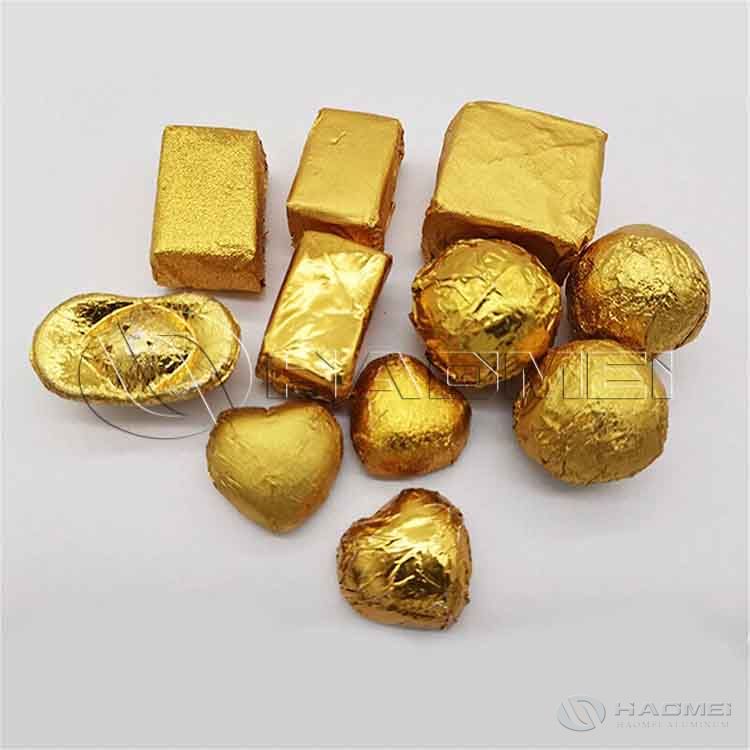 When is aluminum foil used for chocolate wrappingThe use of aluminium foil food for chocolate can be traced back to the early 20th century. In 1911, Swiss candy companies began to wrap chocolate with aluminum foil, gradually replacing the tin foil. T
application
When is aluminum foil used for chocolate wrappingThe use of aluminium foil food for chocolate can be traced back to the early 20th century. In 1911, Swiss candy companies began to wrap chocolate with aluminum foil, gradually replacing the tin foil. T
application
-
PVC Rigid Film and Aluminum Foil for Medicine Packaging
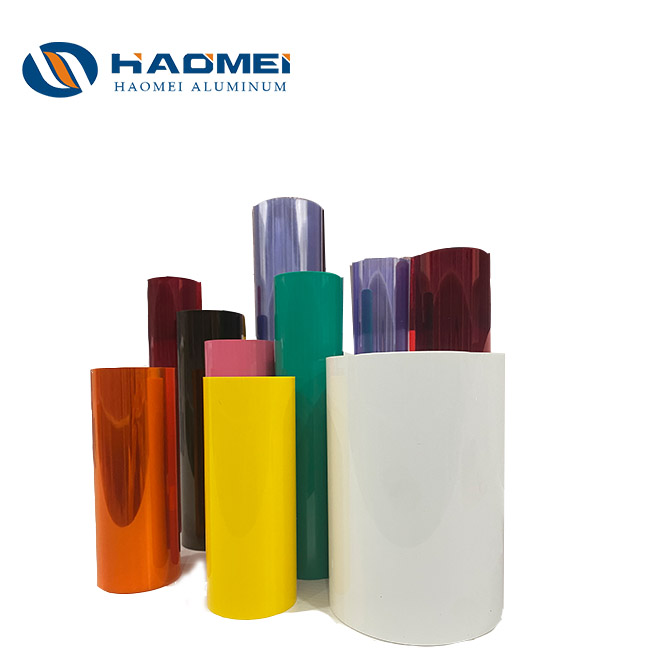 Haomei Aluminum provides different types of aluminum foil and plastic rigid films like PTP aluminum foil, cold forming foil, tropical foil, PVC rigid film, PE/PET film,etc. Best Price! Inquire now.
application
Haomei Aluminum provides different types of aluminum foil and plastic rigid films like PTP aluminum foil, cold forming foil, tropical foil, PVC rigid film, PE/PET film,etc. Best Price! Inquire now.
application
-
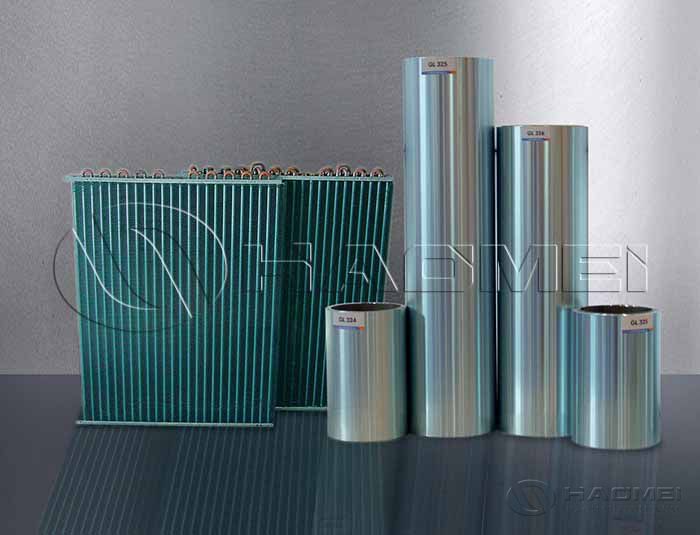 Haomei Aluminum offers you different colors of air conditioner aluminum foil like hydrophilic aluminum foil, including1100/ 3003 /8006/8011 aluminum foil,etc. Learn more.
application
Haomei Aluminum offers you different colors of air conditioner aluminum foil like hydrophilic aluminum foil, including1100/ 3003 /8006/8011 aluminum foil,etc. Learn more.
application
Latest Blog
-
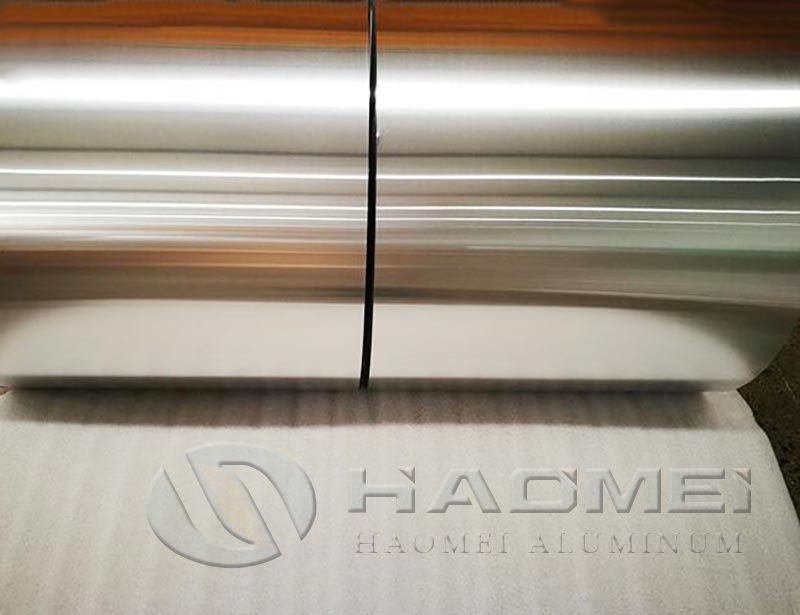 Specify 8011 aluminium foil with practical chemistry, pinhole, temper, testing and packaging checks for reliable food and pharmaceutical conversion.
Blog
Specify 8011 aluminium foil with practical chemistry, pinhole, temper, testing and packaging checks for reliable food and pharmaceutical conversion.
Blog
-
3003, 8011 and 8006 Aluminum Foil for Food Packing
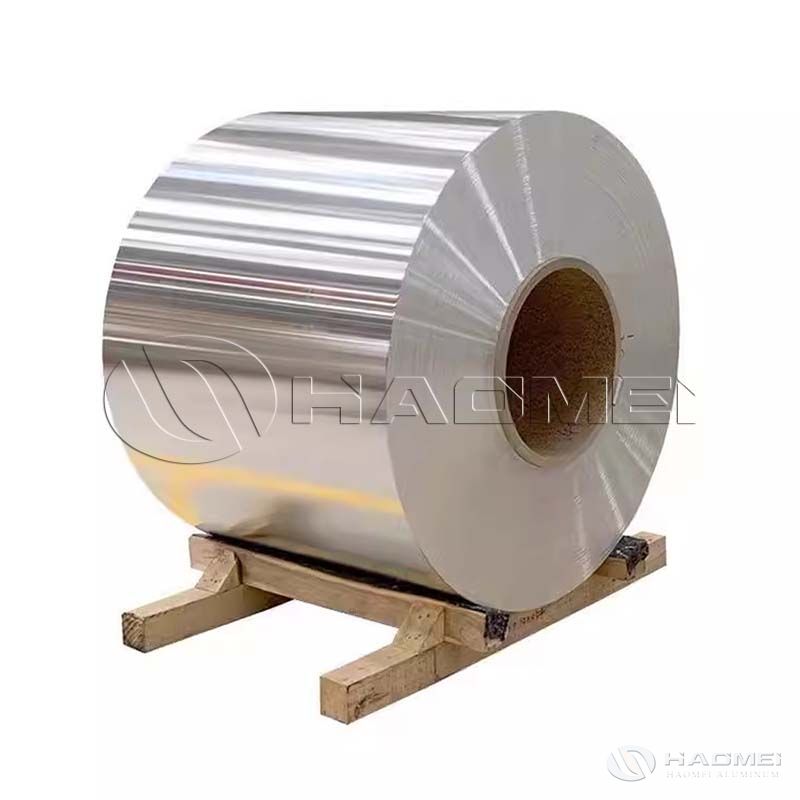 In the food packaging sector, aluminum foil is widely used for products such as composite flexible packaging, containers, meal boxes, sealing lids, and baking packaging due to its excellent barrier properties, light-shielding capabilities, heat resistance
Blog
In the food packaging sector, aluminum foil is widely used for products such as composite flexible packaging, containers, meal boxes, sealing lids, and baking packaging due to its excellent barrier properties, light-shielding capabilities, heat resistance
Blog
-
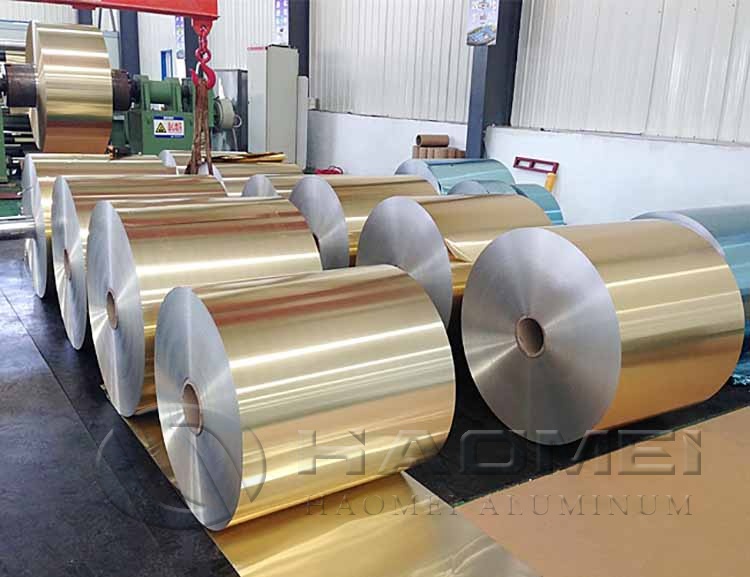 Select air conditioner foil for durable heat-exchanger fins: alloys, hydrophilic coatings, test methods, tolerances, and order specifications for HVAC units.
Blog
Select air conditioner foil for durable heat-exchanger fins: alloys, hydrophilic coatings, test methods, tolerances, and order specifications for HVAC units.
Blog
-
Aluminum Foil Jumbo Roll for Flexible Packaging Laminates
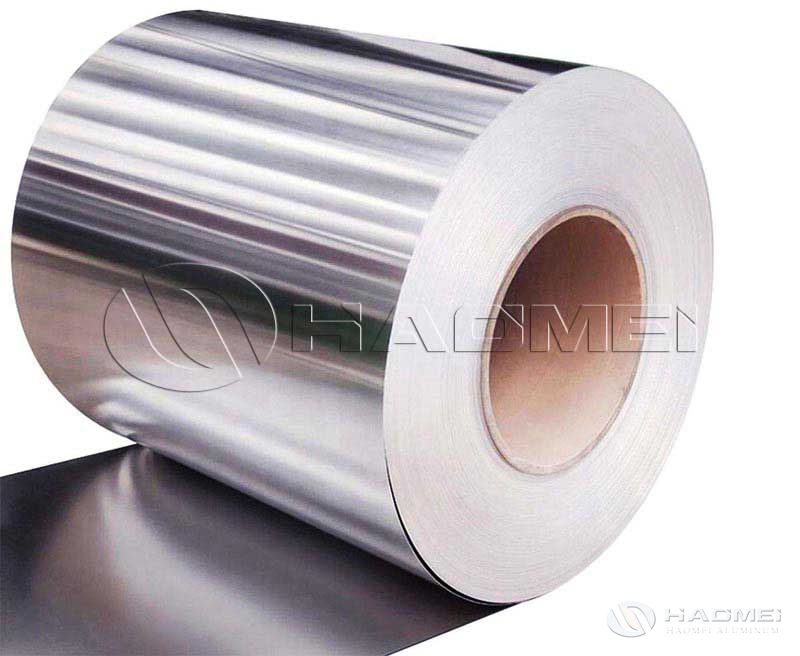 Compare 1235 pure aluminum & 8011 alloy foil jumbo rolls for flexible packaging lamination. Learn their differences in material properties, performance, pros & cons, and key application scenarios to choose the right foil for food, pharmaceutical & consume
Blog
Compare 1235 pure aluminum & 8011 alloy foil jumbo rolls for flexible packaging lamination. Learn their differences in material properties, performance, pros & cons, and key application scenarios to choose the right foil for food, pharmaceutical & consume
Blog
-
 Plan year-end capacitor production with specified aluminum foil: purity, temper, surface controls, test documents, and shipment timing that reduce line risk.
Blog
Plan year-end capacitor production with specified aluminum foil: purity, temper, surface controls, test documents, and shipment timing that reduce line risk.
Blog

Haomei Aluminum CO., LTD.
Tel/Whatsapp: +86-15978414719
Email: sale@alumhm.com
Website: https://www.alumfoils.com
Xin'an Industrial Assemble Region,Luoyang,Henan Province,China
Office Add: 1103, No.14 Waihuan Road, CBD, Zhengzhou, China