Aluminum Foil Thickness for Barbecue and Baking
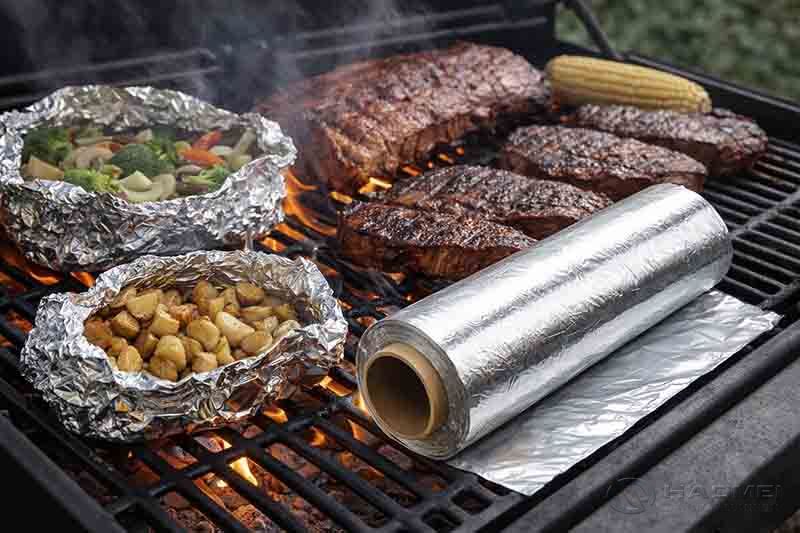
Confused about how to choose the right aluminum foil thickness for barbecue and baking? This guide breaks down 10μm, 15μm, 20μm & 30μm food-grade foil.Learn more.
Aluminum foil food is an indispensable kitchen tool for baking in ovens and air fryers at home, and for outdoor or backyard barbecues. It's non-stick, oil-resistant, retains moisture and heat, and protects baking trays—a small sheet of aluminum foil can solve most cooking problems. However, many people have this question: how to choose the right thickness?

Aluminum Foil Thickness
Household aluminum foil is measured in micrometers (μm) for thickness. The mainstream thicknesses sold are 10μm, 15μm, 20μm, and 30μm. Thickness directly determines the foil's toughness, heat resistance, load-bearing capacity, and usage scenarios. Thicker isn't always better; choosing according to your needs is most practical.
Simply put: thinner aluminum foil is more flexible and cost-effective, suitable for light baking; thicker aluminum foil is more durable and heat-resistant, less prone to breakage, suitable for high-temperature grilling, and dishes with heavy oil and juices, adaptable to high-intensity cooking scenarios.
At the same time, standard food-grade aluminum foil has a melting point of up to 660℃, which will not melt at the temperatures of a household oven or open flame grill, so there are no safety concerns. The key is to focus on thickness suitability.
Aluminum Foil Thickness Guide for Different Uses
10μm Thin Aluminum Foil
This is the most basic and cost-effective standard household foil on the market. It's thin, soft, and easy to fold, offering excellent fit. Its affordable price makes it a staple in many households.
Suitable Scenarios: Various light baking and simple heating applications. For example, roasting vegetables with low moisture and oil content, such as chives, enoki mushrooms, and potato slices; baking small desserts like cookies, biscuits, and egg tarts; everyday baking tray lining; and keeping leftovers warm.
Advantages and Disadvantages: Advantages include its softness, ease of cutting, and ability to prevent food from being obstructed from gentle heating, making it suitable for low-temperature slow baking.
Disadvantages include poor toughness, easy tearing, inability to withstand high temperatures and open flames, and weak load-bearing capacity. It cannot wrap foods with thick soups, high oil content, or large, hard pieces, and should absolutely not be used for open-flame grilling.
15μm Standard Aluminum Foil
15μm is the golden thickness that balances practicality and cost-effectiveness. It overcomes the fragility of thin aluminum foil, significantly improving toughness, making it less prone to tearing and deformation, while retaining good flexibility. It's suitable for most home ovens and air fryers.
Suitable Scenarios: Daily baking + light grilling. Suitable for roasting sweet potatoes, corn, eggplant, and other common ingredients; baking small to medium-sized fish, chicken breast, and pork belly; everyday use as a liner in air fryers, wrapping food to lock in juices, and a versatile option for beginners.
Advantages and Disadvantages: Balanced overall performance, good oil and juice retention, can be reused lightly, and can handle medium to high temperature baking; slightly less flexible than the thinner version, but this doesn't affect home use at all. This is the first choice for everyday home use.
20μm Thick Aluminum Foil
20μm thick aluminum foil is an advanced home use option. It's thicker, more tear-resistant, and puncture-resistant, with more stable high-temperature performance. It can withstand friction and puncture from bones and hard edges, and is fearless of high-temperature baking.
Suitable for: Baking and braising large, oily, juicy, and heavy-duty ingredients. For example, whole fish, ribs, chicken wings, and chunks of beef or lamb—ingredients rich in fat and with tough tendons; baking and braising methods requiring sealing to lock in juices; and ingredients requiring long-term high-temperature baking.
Advantages and disadvantages: High-temperature resistant, leak-proof, and puncture-resistant; durable even under prolonged high-temperature baking; excellent moisture retention and freshness preservation. The only drawback is its relatively hard texture, making it less convenient to fold and wrap small ingredients compared to the thinner version; the price is slightly higher.
30μm Heavy Duty Aluminum Foil
30μm is heavy-duty thickened aluminum foil, a thickness specifically designed for professional grilling and commercial baking. It boasts superior toughness, heat resistance, and durability, withstanding direct exposure to high temperatures over an open flame with minimal damage or deformation.
Suitable for: Outdoor open-flame grilling, charcoal grilling, wrapping and grilling large pieces of whole meat; long-term high-temperature operation in commercial ovens; cooking scenarios requiring repeated use and high-intensity stretching.
Advantages and disadvantages: High temperature resistance, puncture resistance, flame retardancy, sturdy and durable, capable of withstanding the pressure of heavy food; disadvantages include its relatively thick and heavy texture, poor flexibility, difficulty in folding and shaping, and high price, making it less cost-effective for ordinary household use.
Baking VS Grilling
Many people make mistakes by mixing up aluminum foil, mainly because baking and grilling have completely different cooking environments, requiring vastly different aluminum foil specifications:
Baking (Oven/Air Fryer): This involves closed, constant-temperature baking without open flame, resulting in uniform and gentle heat, eliminating the need for extremely high-temperature resistance. For everyday baking, 10-15μm aluminium foil for cake is preferred, as it is thin, conforms well, and heats evenly, preventing food from becoming too soggy. For baking heavy, thick meats, 20μm foil is sufficient.
Grilling (Charcoal/Open Flame): This involves open, high-temperature open-flame heating with large temperature fluctuations, extremely high localized temperatures, and friction from charcoal fire and heavy food pressure, requiring extremely high aluminum foil toughness and high-temperature resistance.
Do not use the 10/15μm thin version, as it is very easy to burn and leak oil, and ignite the tin foil. Prioritize the 20-30μm aluminium foil for bbq. For outdoor charcoal grilling, choose the 30μm version for a more secure result.
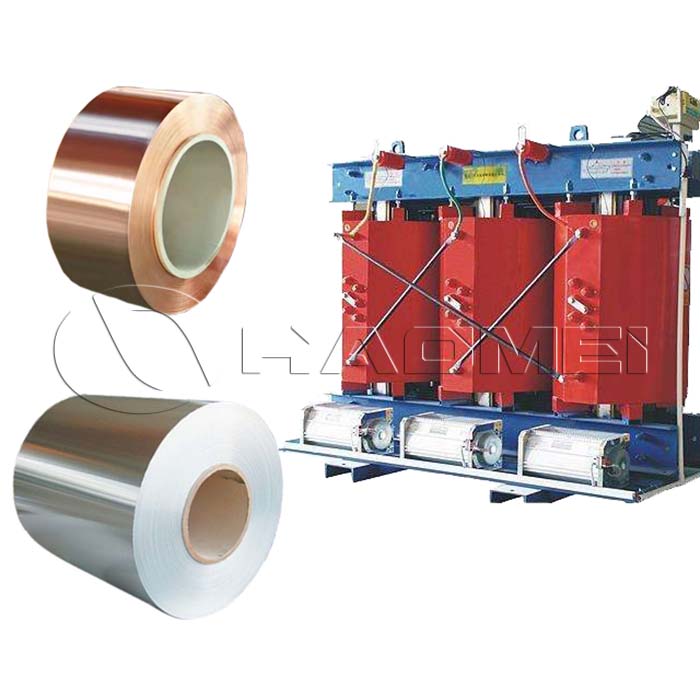
- Aluminum VS Copper Foil for Transformer WindingMay 19, 2025
Aluminum foil and copper foil are two commonly used conductive materials for transformer winding, and they hav...
- Aluminum Foil for Bottle SealingSep 29, 2022
There are two forms of aluminum foil in container sealing: aluminum foil for induction sealing and aluminum fo...
- What is Manufacturing Process of 30 and 38 Gauge Aluminum FoilAug 16, 2023
The thick aluminum foil is with a thickness between 0.1mm and 0.2mm such as 30 gauge aluminum foil and 38 gaug...
- What Are Uses of the Big Roll of Aluminum FoilJun 28, 2023
The big roll of aluminum foil is of wide applications including food packing, household cooking, air condition...
- 1100 VS 1235 Aluminum FoilJun 10, 2025
In the field of aluminum processing, the two pure aluminum foils 1100 and 1235 have formed differentiated appl...
Inquiry
Products Category
Latest Application
-
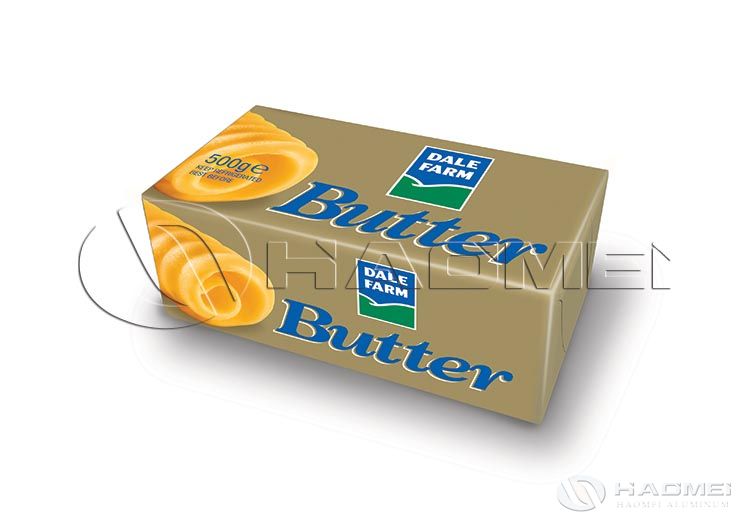 Why butter aluminum foil is neededButter aluminum foil blocks oxygen, moisture, and light, effectively preventing butter from oxidizing and spoiling, preserving nutrients, and significantly extending its shelf life. High-end products can see their sh
application
Why butter aluminum foil is neededButter aluminum foil blocks oxygen, moisture, and light, effectively preventing butter from oxidizing and spoiling, preserving nutrients, and significantly extending its shelf life. High-end products can see their sh
application
-
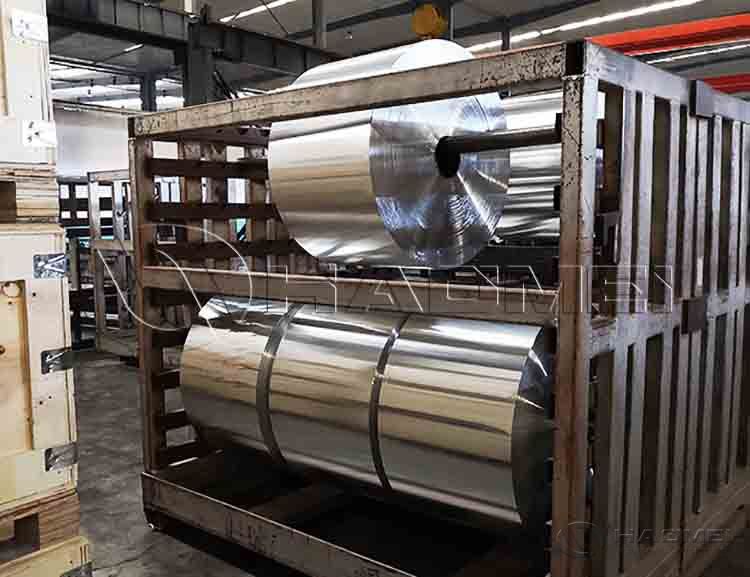 Cables are usually composed of conductors, insulation layers, shielding layers, and sheaths. Aluminum foil for cable is generally located outside the insulation layer as part of the shielding layer. It fits tightly to the surface of the insulation la
application
Cables are usually composed of conductors, insulation layers, shielding layers, and sheaths. Aluminum foil for cable is generally located outside the insulation layer as part of the shielding layer. It fits tightly to the surface of the insulation la
application
-
Aluminum Gold Foil Paper For Chocolate Wrapping
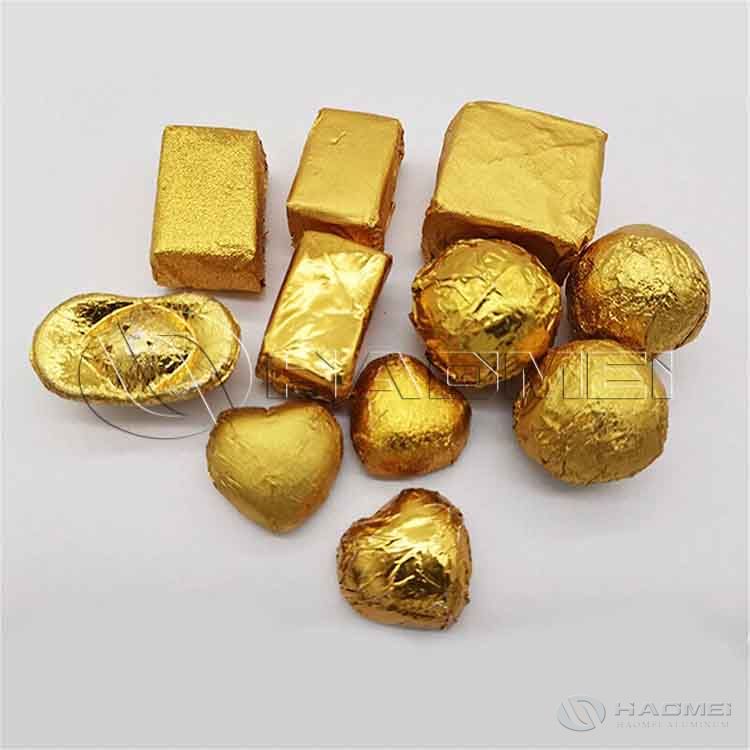 When is aluminum foil used for chocolate wrappingThe use of aluminium foil food for chocolate can be traced back to the early 20th century. In 1911, Swiss candy companies began to wrap chocolate with aluminum foil, gradually replacing the tin foil. T
application
When is aluminum foil used for chocolate wrappingThe use of aluminium foil food for chocolate can be traced back to the early 20th century. In 1911, Swiss candy companies began to wrap chocolate with aluminum foil, gradually replacing the tin foil. T
application
-
PVC Rigid Film and Aluminum Foil for Medicine Packaging
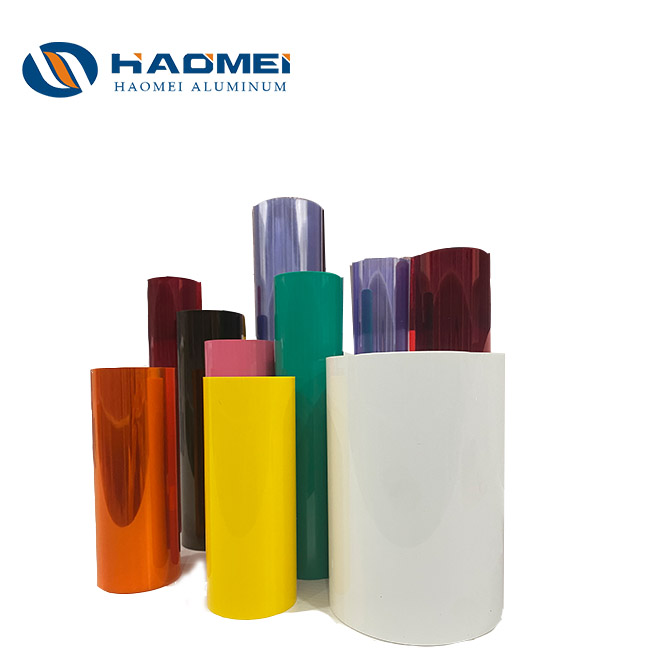 Haomei Aluminum provides different types of aluminum foil and plastic rigid films like PTP aluminum foil, cold forming foil, tropical foil, PVC rigid film, PE/PET film,etc. Best Price! Inquire now.
application
Haomei Aluminum provides different types of aluminum foil and plastic rigid films like PTP aluminum foil, cold forming foil, tropical foil, PVC rigid film, PE/PET film,etc. Best Price! Inquire now.
application
-
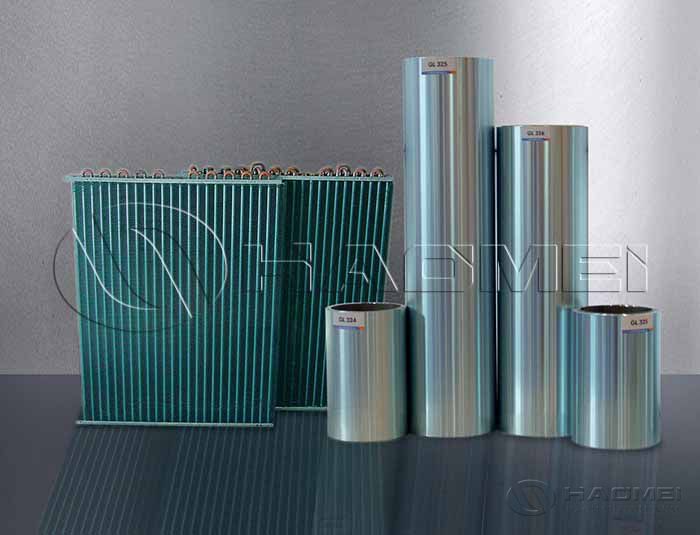 Haomei Aluminum offers you different colors of air conditioner aluminum foil like hydrophilic aluminum foil, including1100/ 3003 /8006/8011 aluminum foil,etc. Learn more.
application
Haomei Aluminum offers you different colors of air conditioner aluminum foil like hydrophilic aluminum foil, including1100/ 3003 /8006/8011 aluminum foil,etc. Learn more.
application
Latest Blog
-
 Plan year-end capacitor production with specified aluminum foil: purity, temper, surface controls, test documents, and shipment timing that reduce line risk.
Blog
Plan year-end capacitor production with specified aluminum foil: purity, temper, surface controls, test documents, and shipment timing that reduce line risk.
Blog
-
Where To Find a Reliable Air Conditioner Fin Foil Supplier
 In the competitive HVAC industry, the quality of air conditioner fin stock directly determines the heat exchange efficiency, durability, and energy-saving performance of air conditioning equipment. For manufacturers, distributors, and processing enterpris
Blog
In the competitive HVAC industry, the quality of air conditioner fin stock directly determines the heat exchange efficiency, durability, and energy-saving performance of air conditioning equipment. For manufacturers, distributors, and processing enterpris
Blog
-
 Specify aircon aluminum foil with durable hydrophilic coating: compare alloys, tests, standards, conversion costs, and receiving controls for HVAC fins.
Blog
Specify aircon aluminum foil with durable hydrophilic coating: compare alloys, tests, standards, conversion costs, and receiving controls for HVAC fins.
Blog
-
Aluminium Foil for Air Conditioner
 Explore aluminium foil for air conditioner questions on alloy, coating, thickness, and inspection for efficient, durable heat-exchanger fins.
Blog
Explore aluminium foil for air conditioner questions on alloy, coating, thickness, and inspection for efficient, durable heat-exchanger fins.
Blog
-
What Is Food Grade Aluminum Foil Jumbo Roll
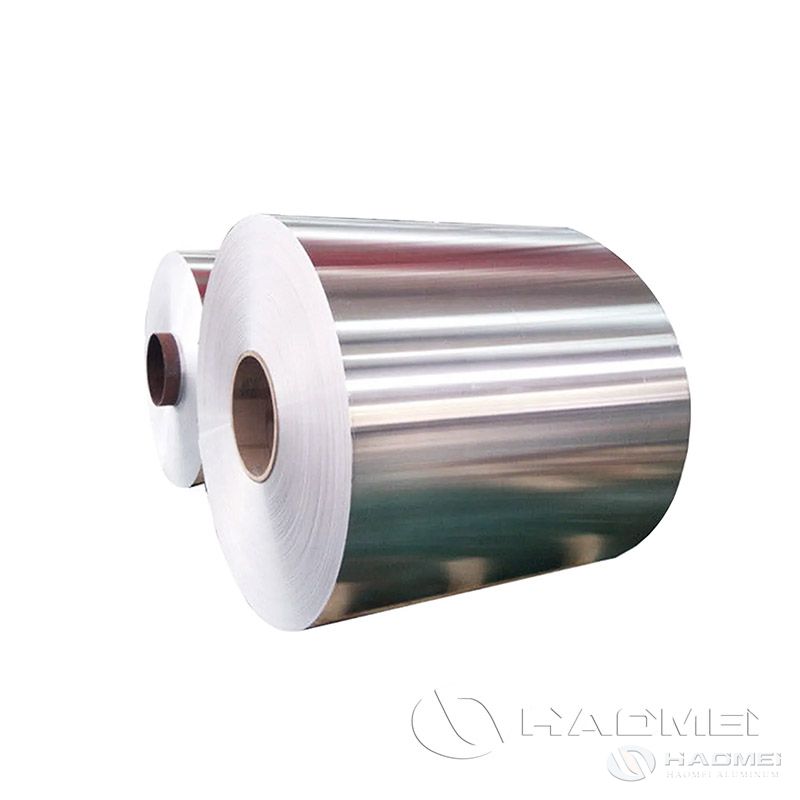 From the aluminum foil used for everyday baking and grilling to the containers used for takeout and the packaging that keeps food fresh, these ubiquitous aluminum foil products all originate from the same core raw material: the food grade aluminum foil ju
Blog
From the aluminum foil used for everyday baking and grilling to the containers used for takeout and the packaging that keeps food fresh, these ubiquitous aluminum foil products all originate from the same core raw material: the food grade aluminum foil ju
Blog

Haomei Aluminum CO., LTD.
Tel/Whatsapp: +86-15978414719
Email: sale@alumhm.com
Website: https://www.alumfoils.com
Xin'an Industrial Assemble Region,Luoyang,Henan Province,China
Office Add: 1103, No.14 Waihuan Road, CBD, Zhengzhou, China